
Glass color is one of the most important details when choosing decorative glass bulbs. Even when the bulb shape and filament design are the same, different glass finishes can create very different lighting effects, visual moods and interior styles.
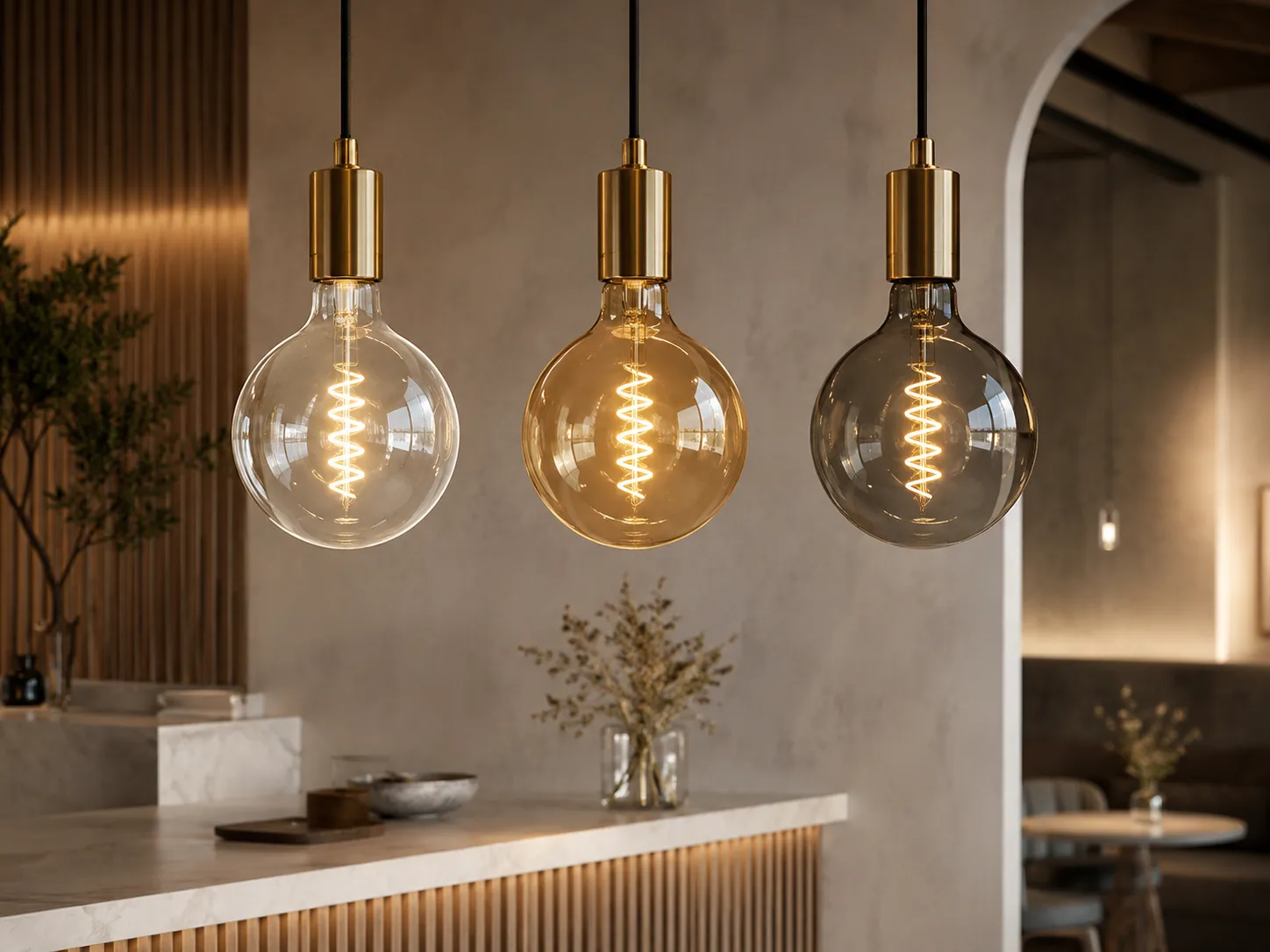
Clear glass, champagne glass and smoke gray glass are three of the most commonly used options for decorative atmosphere bulbs. Each one has its own character and is suitable for different spaces such as restaurants, cafes, hotels, bars, retail stores and branded interiors.
Understanding the difference between these glass colors can help designers, lighting buyers and project teams choose the right decorative bulb for their space.
Why Glass Color Matters in Decorative Bulbs
Decorative bulbs are usually visible inside the space. This means the glass shell is not only a technical part of the bulb, but also part of the interior design.
The glass color affects:
The brightness feeling
The softness of the light
The visibility of the filament
The mood of the space
The perceived style of the bulb
The way the bulb matches furniture and materials
The overall atmosphere of the room
A clear glass bulb may feel bright and clean. A champagne glass bulb may feel warm and comfortable. A smoke gray glass bulb may feel deeper, calmer and more premium.
Clear Glass Bulbs
Clear glass bulbs have a transparent shell that shows the filament clearly. They create a clean, direct and bright visual effect.
Clear glass is suitable when the design needs a simple and modern look. It allows the filament shape to be highly visible, which makes it a good choice for custom filament bulbs, letter filaments, moon filaments, spiral filaments and decorative lighting features.
Best Applications for Clear Glass
Clear glass bulbs work well in:
Modern restaurants
Bright cafes
Bakery counters
Retail stores
Product display areas
Clean pendant lighting
Minimalist interiors
Spaces where the filament design should be clearly visible
Clear glass is especially suitable for interiors with light-colored walls, natural wood, marble, white counters, modern furniture and simple architectural lines.
Advantages of Clear Glass
Clear glass makes the bulb look clean and timeless. It works with many interior styles and does not visually darken the space.
Clear glass bulbs are a good choice when you want:
A brighter visual effect
A clean and modern appearance
High filament visibility
A simple decorative style
Good compatibility with many fixtures
A fresh daytime lighting feeling
Things to Consider with Clear Glass
Because clear glass shows the light source directly, it may feel brighter to the eye than tinted glass. For visible bulbs used near dining tables, bedside areas or seating zones, brightness and glare should be considered carefully.
If the space needs a softer mood, champagne glass or dimmable versions may be more suitable.
Champagne Glass Bulbs
Champagne glass bulbs have a warm amber-toned shell. This glass color creates a softer and warmer visual effect compared with clear glass.
Champagne glass is one of the most popular options for decorative atmosphere lighting because it makes the bulb feel cozy, elegant and comfortable.
Best Applications for Champagne Glass
Champagne glass bulbs work well in:
Restaurants
Fine dining spaces
Private dining rooms
Cafes and coffee shops
Hotel guest rooms
Boutique hotels
Bedside lamps
Lounges
Warm residential interiors
Hospitality spaces
Champagne glass is especially suitable for spaces that want a welcoming and relaxed atmosphere.
Advantages of Champagne Glass
Champagne glass helps reduce the harsh feeling of visible bulbs. It adds warmth to the light and makes the bulb look more decorative even when it is not turned on.
Champagne glass bulbs are a good choice when you want:
A warmer lighting mood
A softer visual effect
A comfortable dining atmosphere
A cozy cafe feeling
A refined hotel room look
A more premium decorative appearance
A stronger warm glow from the filament
Why Champagne Glass Is Popular for Hospitality Lighting
Restaurants, cafes and hotels often need lighting that feels comfortable instead of overly bright. Champagne glass is very suitable for these spaces because it creates a natural warm tone and helps make visible bulbs more pleasant to look at.
For dining tables, guest rooms, lounges and seating areas, champagne glass can make the space feel softer and more welcoming.
Smoke Gray Glass Bulbs
Smoke gray glass bulbs have a darker tinted shell. They create a deeper, more dramatic and more premium visual effect.
Smoke gray glass is suitable for modern spaces, darker interiors and areas where the lighting should feel calm, stylish and sophisticated.
Best Applications for Smoke Gray Glass
Smoke gray glass bulbs work well in:
Modern restaurants
Bars and lounges
Hotel lounges
Boutique hotels
Private dining rooms
Retail stores
Branded interiors
Dark-toned commercial spaces
Premium decorative installations
Smoke gray glass is especially suitable for interiors with dark wood, black metal, stone, leather, concrete, deep green, dark gray or warm bronze materials.
Advantages of Smoke Gray Glass
Smoke gray glass can make the bulb look more refined and less visually bright. It gives the lighting a deeper and more atmospheric feeling.
Smoke gray glass bulbs are a good choice when you want:
A premium modern appearance
A deeper visual mood
Less direct brightness from the glass
A calm and intimate atmosphere
A stylish bar or lounge effect
Better matching with dark interior materials
A more dramatic decorative lighting feature
Things to Consider with Smoke Gray Glass
Because smoke gray glass is darker, it may reduce the visible brightness feeling compared with clear glass or champagne glass. This can be a benefit in bars, lounges and intimate spaces, but it may not be ideal for areas that need strong brightness.
For projects that need both mood and function, dimmable bulbs or layered lighting should be considered.
Clear Glass vs Champagne Glass vs Smoke Gray Glass
Clear glass is best for clean, modern and brighter spaces. It shows the filament clearly and works well when the bulb itself needs to look simple and transparent.
Champagne glass is best for warm, comfortable and hospitality-focused spaces. It creates a softer and more inviting atmosphere, making it ideal for restaurants, cafes, hotels and guest rooms.
Smoke gray glass is best for premium, intimate and modern spaces. It creates a deeper mood and is suitable for bars, lounges, boutique hotels and dark-toned interiors.
How to Choose the Right Glass Color
When choosing between clear glass, champagne glass and smoke gray glass, consider the space, design style and lighting purpose.
Choose Clear Glass If You Need
A clean and bright look
High filament visibility
A modern interior style
A simple decorative appearance
Lighting for cafes, retail displays or product zones
Choose Champagne Glass If You Need
A warm and soft glow
A cozy dining or cafe atmosphere
Comfortable hotel room lighting
A refined hospitality look
Decorative bulbs that feel less harsh
Choose Smoke Gray Glass If You Need
A deeper and more premium mood
Lighting for bars, lounges or modern hotels
A darker decorative glass effect
Lower visual brightness
A stylish and intimate atmosphere
Glass Color and Filament Design
Glass color should also be matched with filament design.
Clear glass works well with detailed filament shapes because the filament is easy to see.
Champagne glass works well with warm filament designs, spiral filaments, flame shapes, moon shapes and classic Edison styles.
Smoke gray glass works well with strong filament patterns, colored filaments, modern shapes and dimmable lighting effects.
For custom projects, the same filament design can be tested in different glass colors to compare the final effect.
Glass Color and Dimming Effect
Dimming can change how each glass color feels.
Clear glass becomes cleaner and softer when dimmed, but the filament remains very visible.
Champagne glass becomes warmer and more relaxing when dimmed, making it ideal for evening dining, cafe seating and hotel rooms.
Smoke gray glass becomes deeper and more intimate when dimmed, making it suitable for bars, lounges and private spaces.
For restaurants, cafes and hotels, dimmable decorative bulbs can help the same bulb adapt to different times of day and different customer experiences.
Recommended Spaces by Glass Color
Clear Glass
Modern cafes
Retail stores
Bakery counters
Bright restaurants
Product display zones
Clean pendant lighting
Champagne Glass
Restaurants
Coffee shops
Hotel guest rooms
Bedside lamps
Private dining rooms
Warm hospitality interiors
Smoke Gray Glass
Bars
Lounges
Boutique hotels
Modern restaurants
Private rooms
Premium retail interiors
Technical Details to Confirm Before Ordering
Before ordering decorative glass bulbs, it is important to confirm both visual and technical details.
Key points to check include:
Bulb shape
Glass color
Filament design
Light color
Dimmable or non-dimmable version
Voltage requirement
Lamp base type
Fixture compatibility
Installation direction
Application space
Target market
For international projects, voltage options such as 120V, 230V and selected 85V-265V options may need to be confirmed depending on the product model.
Conclusion
Clear glass, champagne glass and smoke gray glass bulbs each create a different decorative lighting effect. Clear glass feels clean, bright and modern. Champagne glass feels warm, soft and comfortable. Smoke gray glass feels premium, deep and atmospheric.
The best choice depends on the space, interior style, brightness requirement, filament design and desired customer experience.
For restaurants, cafes, hotels, bars, retail stores and branded interiors, choosing the right glass color can make decorative bulbs more effective, more comfortable and more connected to the overall design concept.