Lighting Brand Collections
Develop a differentiated decorative bulb family with confirmed appearance, electrical options, labels and packaging for the target market.

GLORILUM helps lighting brands, designers, contractors, wholesalers and project buyers select and develop decorative glass bulbs for restaurants, cafés, hotels, bars, retail stores and branded interiors.
From atmosphere and product selection to glass finish, filament design, voltage, dimming, samples and production, our team helps turn project requirements into practical lighting specifications.
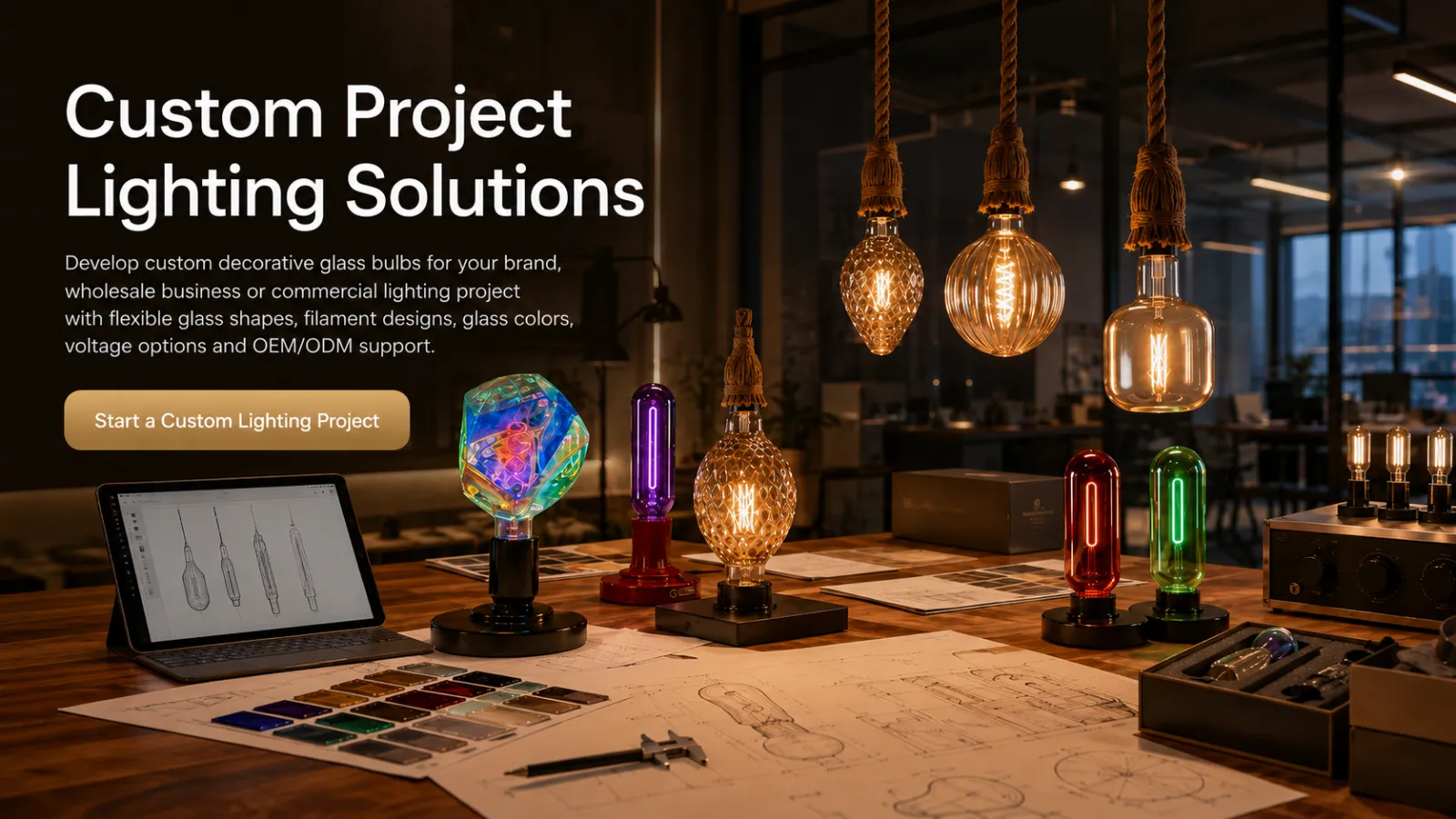
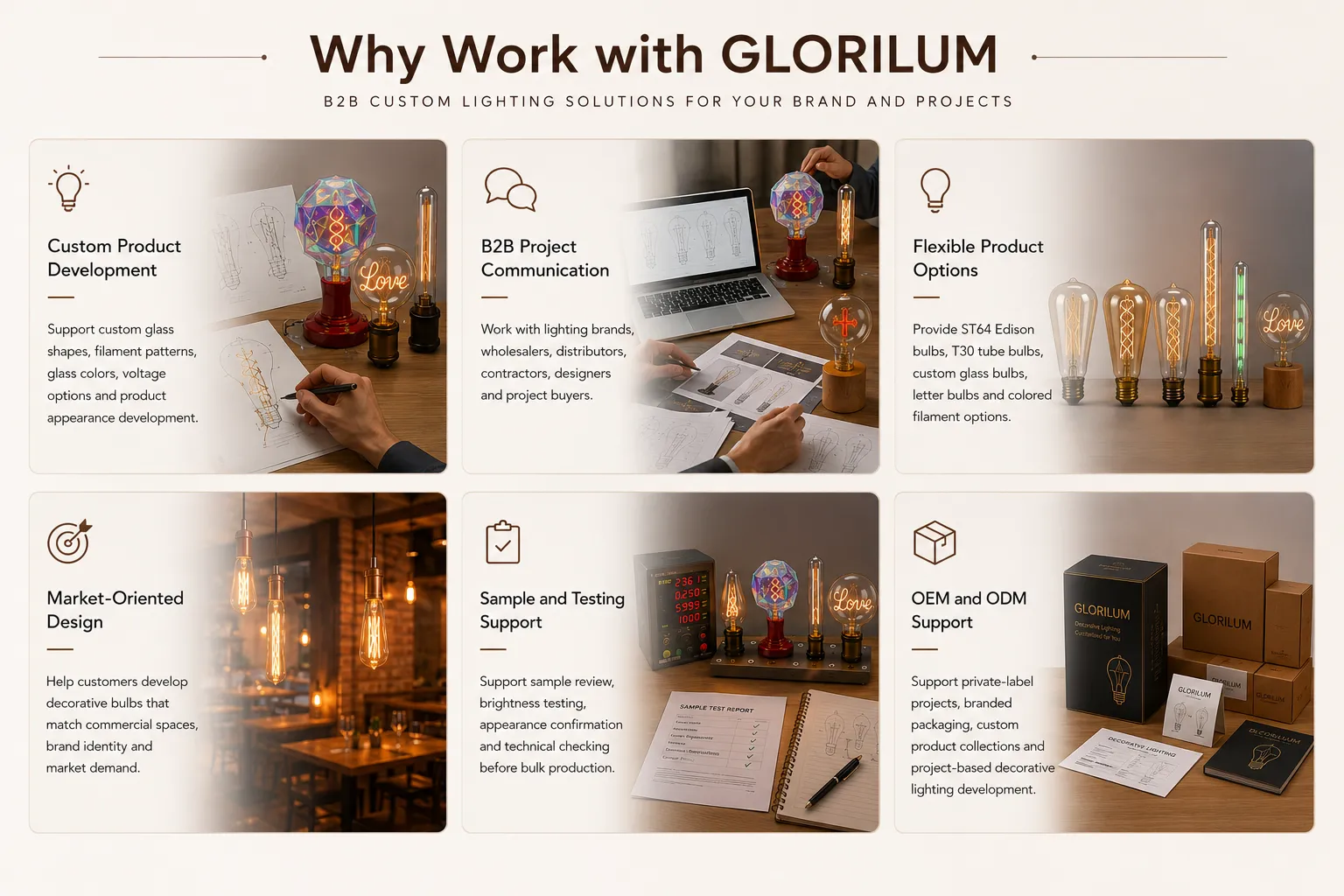
Develop decorative glass bulbs around your product idea, target market, fixture, brand direction and commercial project requirements—not around a fixed catalogue alone.
GLORILUM supports lighting brands, wholesalers, distributors, designers, contractors and project buyers with feasibility review, glass and filament development, electrical configuration, samples, packaging and production coordination.

A real example of glass form and internal design being developed together for a distinctive B2B project.
View Product →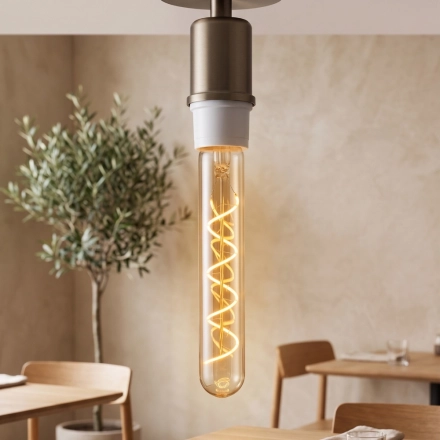
A long-format product family for project pendants, counters and architectural decorative features.
View Product →This page is the main entry point for GLORILUM custom work. The development path changes according to whether the priority is a new product, a private-label range, a fixture requirement or a repeatable project specification.
Develop a differentiated decorative bulb family with confirmed appearance, electrical options, labels and packaging for the target market.
Build practical assortments around customer segments, voltage, lamp bases, packaging protection and repeat-order requirements.
Apply approved brand information to suitable existing product platforms while coordinating labels, cartons and commercial documentation.
Review new glass forms, filament ideas, finish directions and technical configurations before samples and tooling commitments.
Select or adapt bulbs for fixtures, interior concepts, voltage systems, dimming behavior, installation conditions and delivery schedules.
Maintain approved product, packaging and quality references so confirmed lighting directions can be repeated more consistently.
These are real GLORILUM products rather than AI scene images. They demonstrate different glass, form and filament directions; final feasibility, voltage, dimming, quantity and packaging must be confirmed for each project.
A product direction for projects where the outer glass and internal visual feature need to work as one concept.
View Product →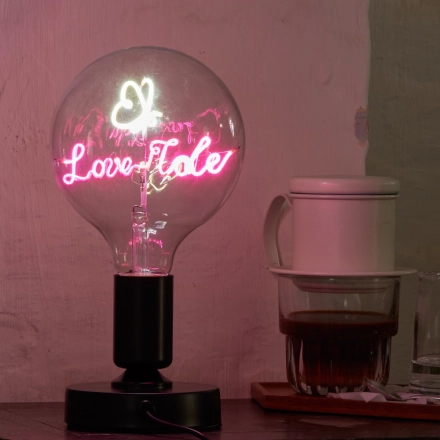
A clear-glass direction for approved initials, short names and selected brand-facing decorative features.
View Product →A long-format platform for vertical pendants, bar counters and project fixtures that need a slim decorative proportion.
View Product →
A sculptural glass direction illustrating how form, surface treatment and internal light can create a distinctive product family.
View Product →Need another glass shape, finish, filament pattern, voltage, base or packaging direction?
Browse All Products →The terms are related but not identical. Defining the correct path early helps organize cost, risk, samples, timing and approval responsibility.
Start from a suitable existing bulb family and confirm glass finish, filament option, voltage, base, labels, packaging and private-label requirements.
Review a new or substantially adapted concept involving glass form, filament construction, surface finish or combined appearance requirements.
Match an existing or adapted bulb to a fixture, interior, destination market, dimming system, quantity and delivery schedule.
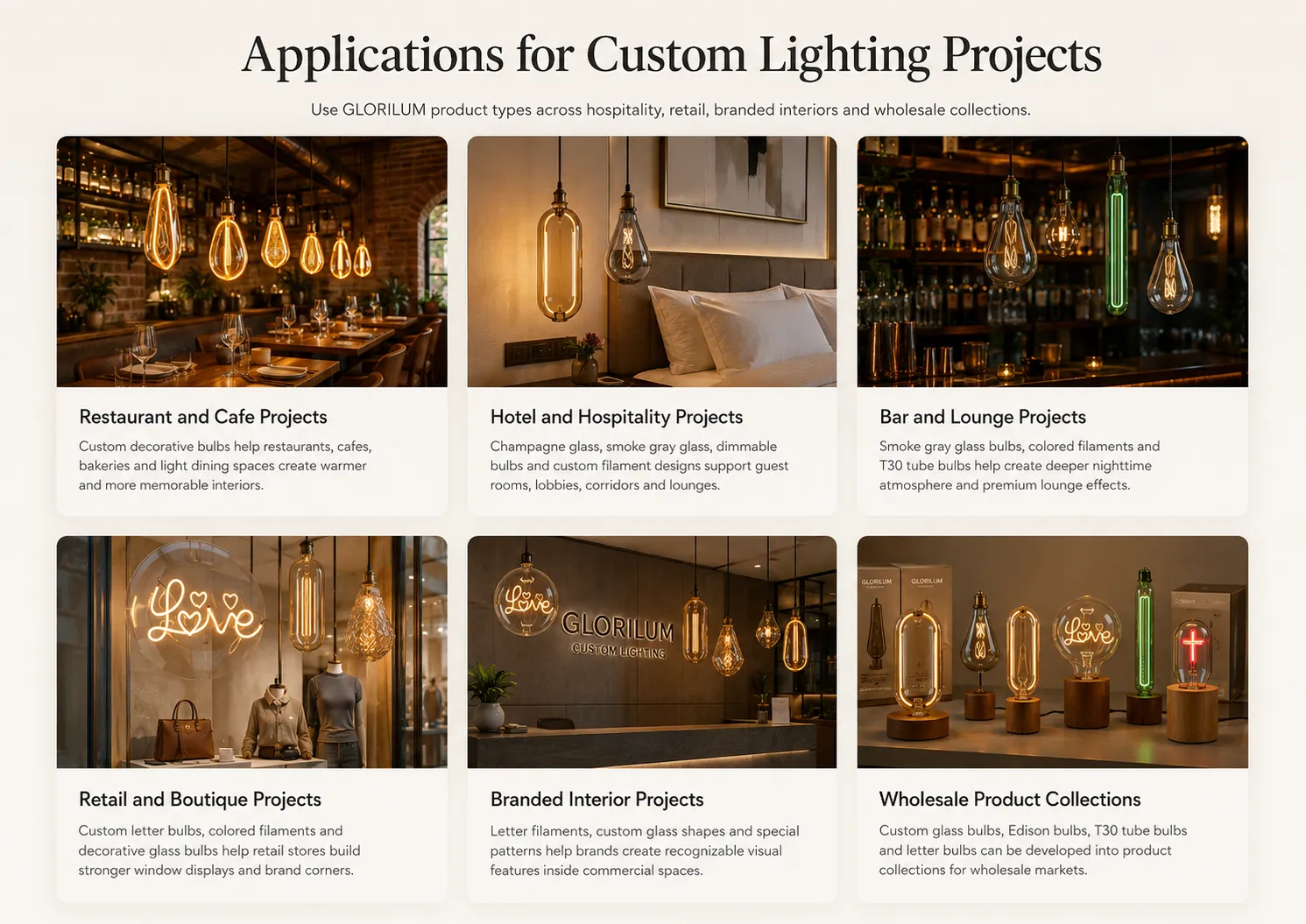
Not every option is available for every bulb. We confirm the combination according to product structure, quantity, target market, application and manufacturing feasibility.
A clear first brief reduces unnecessary samples and helps our team distinguish a product idea from a production-ready specification.
Send a Project Requirement →Tell us whether the project is for a brand collection, wholesale program, fixture, interior project or repeat order.
Share product references, dimensions, fixture details or authorized graphics when they are available.
Confirm destination countries, voltage, base, dimming expectations and any project-specific verification needs.
Provide estimated quantities, sample timing, required delivery window and private-label or protection requirements.
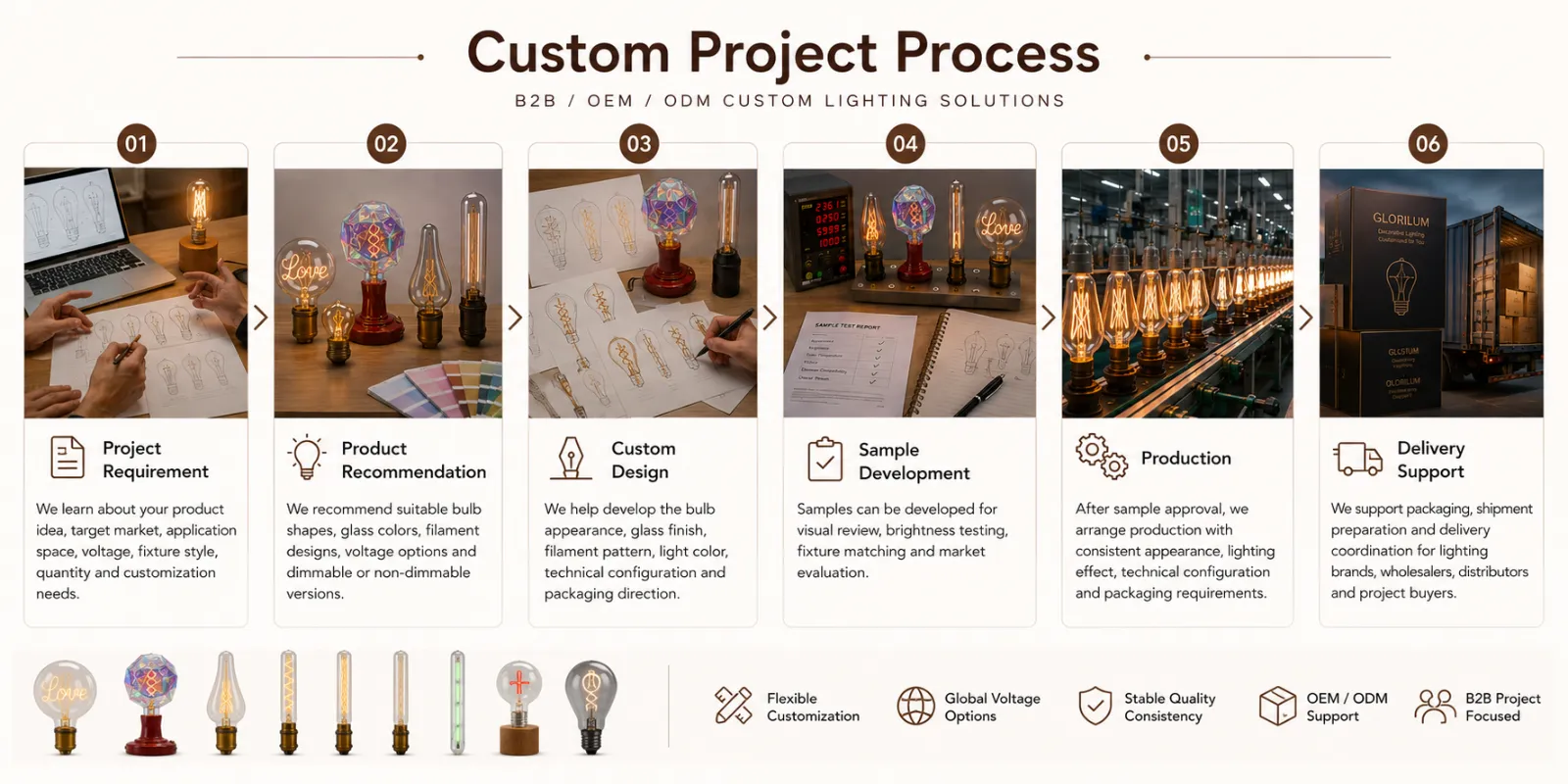
Each stage produces a clearer decision. Production begins only after the relevant appearance, electrical, packaging and commercial requirements are confirmed.
Collect the product idea, market, application, fixture, quantity, timing and packaging requirements.
Evaluate glass, filament, electrical configuration, tooling implications and practical development boundaries.
Organize the agreed configuration, development work, commercial terms and sample direction.
Confirm appearance, dimensions, lighting effect, fit, voltage and packaging details before authorization.
Follow approved references through production checks, labeling, protective packaging and shipment preparation.
These checkpoints help reduce ambiguity between a good visual concept and a repeatable commercial product.
Approve glass color, finish, filament layout, illuminated appearance and acceptable visual variation through samples.
Confirm voltage, wattage, base, dimming expectation and fixture operating conditions for the destination market.
Check overall product size, installation orientation, fixture clearance and the actual application environment.
Approve labels, carton marks, protection method and the records needed for future production or replacement orders.
Clear answers for B2B buyers comparing OEM, ODM and project-specific decorative lighting development.
OEM normally starts from a confirmed product platform and adds agreed specifications or branding. ODM involves a more substantial product-development role, such as a new glass form, filament concept or combined appearance direction.
New concepts can be reviewed, but feasibility depends on glass construction, filament design, electrical requirements, tooling, quantity, target cost and timing. A reference or drawing helps start the review.
Depending on feasibility, projects may involve decorative globe bulbs, Edison forms, T30 tube bulbs, candle bulbs, custom letter or pattern bulbs and special glass-shape concepts.
Yes, selected projects can combine glass form or finish with a custom filament direction. The two elements must be reviewed together because size, orientation and construction affect the final result.
GLORILUM can discuss 120V and 230V configurations depending on the product. Confirm the destination market, base, fixture and dimming requirements before sample approval.
Dimming may be available for selected configurations. The bulb and dimmer should be evaluated together because compatibility depends on the electrical design and control system.
MOQ varies by product, customization depth, tooling, materials and packaging. Share the estimated quantity so we can distinguish a sample request, pilot order and production project.
Timing depends on concept complexity, drawing or tooling work, material availability, sample revisions and approval speed. We review the schedule after the requirements are clear.
Yes. Samples are used to confirm appearance, dimensions, lighting effect, electrical configuration and fixture fit before a bulk order is authorized.
For confirmed B2B projects, labels, cartons and protective packaging can be coordinated according to the product, quantity and approved brand information.
Explore custom decorative glass bulbs and custom letter and pattern lights, follow the custom lighting buyer guide, review our project documentation and support, or check what to consider before ordering a custom glass bulb.
Explore custom decorative glass bulbs and custom letter and pattern lights, follow the custom lighting buyer guide, review our project documentation and support, or check what to consider before ordering a custom glass bulb.
What is custom project lighting?
Custom project lighting means developing decorative lighting products based on specific project, brand or market requirements. For B2B customers, this may include custom glass bulb shapes, filament patterns, glass colors, voltage options, dimmable versions, lamp bases, packaging and private-label requirements. It is suitable for lighting brands, wholesalers, distributors, contractors, designers and commercial project buyers who need more than standard lighting products.
Can GLORILUM support OEM and ODM decorative lighting projects?
Yes, GLORILUM can support OEM and ODM decorative lighting projects for B2B customers. We can help develop custom decorative glass bulbs, T30 tube bulbs, Edison bulbs, custom letter bulbs, colored filament bulbs and project-based lighting products. Depending on the project requirements, we can support product appearance development, technical configuration, sample development, packaging direction and production preparation.
What bulb types can be customized for B2B lighting projects?
Several bulb types can be customized for B2B lighting projects, including custom glass atmosphere bulbs, ST64 Edison bulbs, T30 tube bulbs, custom letter and pattern bulbs, colored filament bulbs and dimmable decorative bulbs. Custom options may include glass shape, glass color, filament pattern, filament color, voltage, dimming function, lamp base and packaging.
Can glass shape and filament design be customized together?
Yes, glass shape and filament design can be customized together for project-based decorative lighting. Customers can choose or develop special glass forms such as teapot, vase, globe, square, cylinder, capsule or teardrop shapes, while also customizing spiral, X shape, V shape, flame, moon, letter, logo-inspired or colored filament designs. This helps create a more distinctive lighting product for commercial spaces or branded product collections.
Can you customize voltage for different markets?
Yes, voltage can be customized for different markets depending on the product model and project requirements. Common options include 120V and 230V, and selected models may support wider voltage options such as 85V-265V. Before production, customers should confirm the target market, voltage requirement, lamp base, fixture compatibility and dimming system.
Are custom T30 tube bulbs suitable for commercial projects?
Yes, custom T30 tube bulbs are suitable for many commercial lighting projects. Their long and slim shape works well for vertical pendant lighting, bar counters, cafe counters, hotel lobbies, retail displays, showrooms and branded interior spaces. T30 tube bulbs can also support spiral, linear, V shape, X shape, warm white or colored filament designs for different project needs.
Can decorative glass bulbs be developed for private-label lighting brands?
Yes, decorative glass bulbs can be developed for private-label lighting brands. GLORILUM can support custom product collections, branded packaging, product labels and project-based decorative bulb designs for lighting brands, wholesalers and distributors. Private-label projects can include custom glass bulbs, Edison bulbs, T30 tube bulbs, letter bulbs, colored filament bulbs and other decorative lighting options.
What should I prepare before starting a custom lighting project?
Before starting a custom lighting project, it is helpful to prepare the product idea, target market, application space, preferred bulb shape, glass color, filament pattern, voltage requirement, lamp base, dimming requirement, quantity estimate and packaging needs. If you have drawings, reference images, fixture details or brand guidelines, these can also help us recommend a more suitable custom lighting solution.
Can samples be developed before bulk production?
Yes, samples can be developed before bulk production. Sample development helps customers review the bulb appearance, glass color, filament effect, brightness, voltage configuration, lamp base compatibility and overall lighting atmosphere. After the sample is confirmed, bulk production can be arranged with more consistent appearance, lighting effect and technical requirements.
Share the target market, application, reference, dimensions, voltage, estimated quantity, packaging needs and schedule. We will help identify the right OEM, ODM or project-specific path.
Send drawings, reference images, fixture details or approved brand information when available.
Discuss Your Custom Project →