
Ordering custom glass atmosphere bulbs is not only about choosing a beautiful bulb shape. For restaurants, hotels, cafes, bars, retail stores, interior design projects and lighting brands, the right custom bulb should match the application scene, glass finish, filament pattern, color effect, voltage, dimmable requirement, lamp holder, installation method, packaging and brand positioning. Before starting a custom lighting project, buyers should clearly define where the bulb will be used, what atmosphere it should create, what technical requirements are needed and how the product should be presented to the final market.
Custom glass atmosphere bulbs are designed to do more than provide basic light. They are used to create mood, visual identity and memorable interior experiences. In restaurants, cafes, hotels, bars, retail stores and branded spaces, a custom bulb can become part of the design language of the whole environment.
Before ordering custom glass atmosphere bulbs, it is important to think carefully about both the visual design and the practical use. A bulb may look beautiful in a sample photo, but it also needs to fit the fixture, voltage system, brightness requirement, dimming method, interior style and customer experience.
For lighting brands, wholesalers, designers and commercial project buyers, clear planning at the beginning can reduce mistakes, save development time and make the final product more suitable for the target market. The following points can help you prepare before placing a custom order.
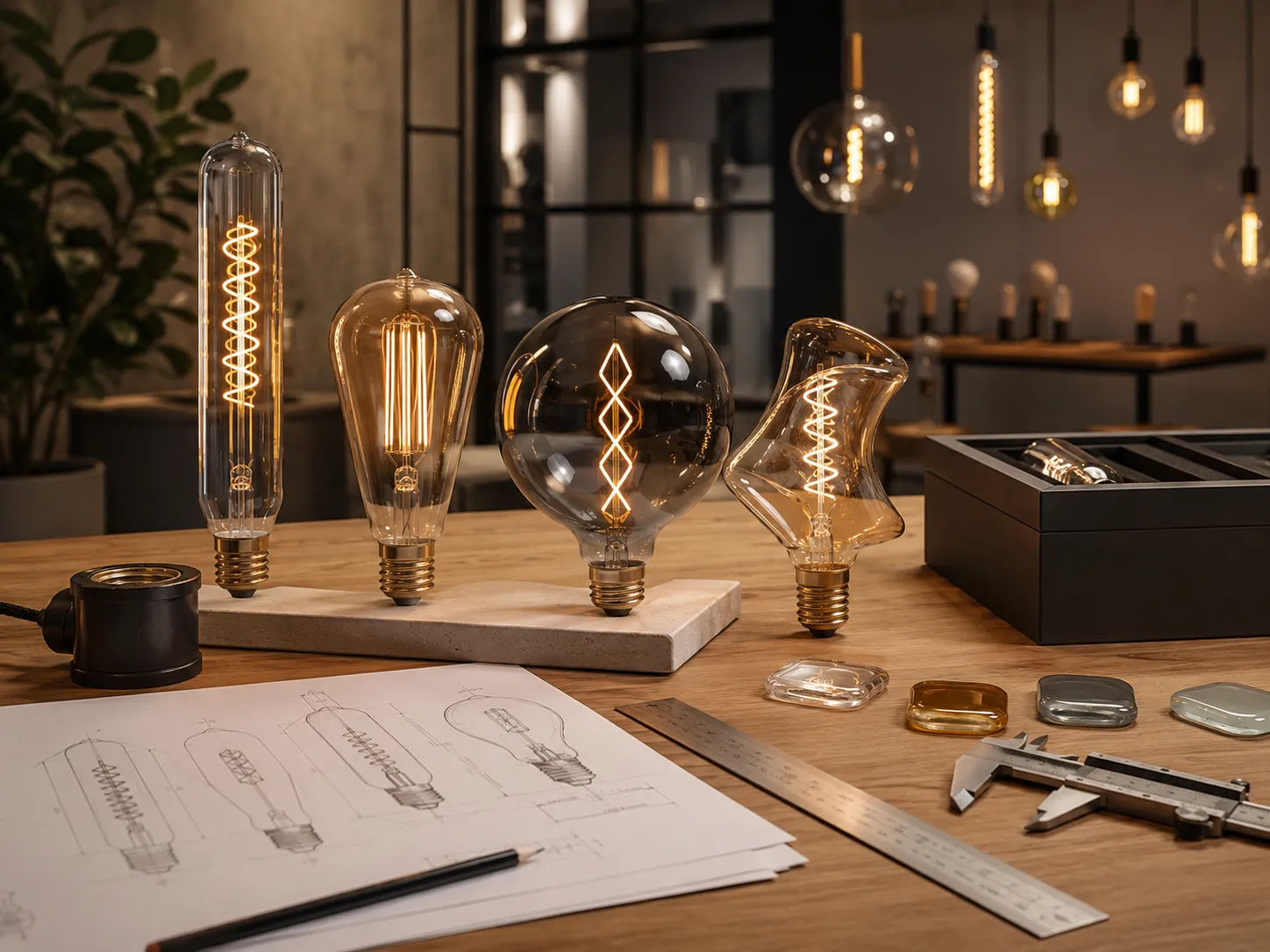
Understand the Purpose of the Custom Bulb
The first question is simple but very important: why do you need a custom bulb?
Some buyers want a custom glass atmosphere bulb because they need a unique product for their lighting brand. Some need a special bulb for a restaurant, hotel, cafe, bar or retail project. Some want to create a decorative bulb with a special filament shape, glass color or visual theme. Others may need a bulb that matches a specific lamp base, pendant fixture or interior concept.
The purpose will influence almost every decision. A bulb designed for a hotel guest room may need a soft, warm and comfortable glow. A bulb designed for a bar may need a stronger visual effect and deeper color. A bulb designed for a retail display may need to attract attention and support brand identity. A bulb designed for a lighting product line may need to be beautiful, stable and suitable for repeated sales.
Before starting development, it is helpful to define the main use clearly. This makes it easier to choose the bulb shape, filament design, glass color and lighting performance.
Choose the Right Bulb Shape
The shape of the glass bulb is one of the most visible parts of the product. It affects how the bulb looks when installed, how the filament is displayed and what type of fixture it can match.
ST64 Edison bulbs are widely used for decorative lamps, table lamps, pendant lights, bedside lamps and atmosphere lighting. Their classic shape is suitable for vintage, modern, warm and artistic interiors.
T30 tube bulbs are suitable for vertical hanging installations, linear lighting designs, bar counters, cafes, restaurants, retail displays and modern decorative fixtures. Their long glass body creates a clean and architectural visual effect.
Custom glass shapes are suitable for special design projects. A unique glass form can help create a stronger product identity. This is useful for lighting brands, boutique hotels, themed restaurants, commercial installations and premium decorative lighting collections.
When choosing the bulb shape, consider the fixture first. A long tube bulb may look beautiful, but it needs enough vertical space. A large decorative bulb may not fit a small lamp holder or compact fixture. A special glass shape may need additional testing to make sure the internal filament design fits well.
The best bulb shape should balance beauty, installation practicality and market use.
Decide the Glass Color and Finish
Glass color strongly affects the atmosphere of the bulb. Even with the same filament and wattage, different glass finishes create different feelings.
Clear glass gives a clean and direct look. It shows the filament clearly and works well for modern interiors, cafes, retail stores, design studios and spaces where the inner filament pattern is the main feature. Clear glass is also a good choice when the bulb needs to look bright, simple and versatile.
Champagne glass creates a warmer and softer effect. It adds a gentle golden tone to the bulb and makes the lighting feel more elegant. Champagne glass works well in restaurants, boutique hotels, bedrooms, lounges, cafes, wine bars and interiors with wood, brass, beige, leather or natural materials.
Smoke gray glass creates a more modern and premium feeling. It softens the brightness and gives the bulb a deeper visual tone. Smoke gray glass is suitable for bars, hotel lounges, industrial interiors, luxury retail stores, darker restaurants and contemporary spaces.
Some custom projects may require special glass colors. These can be developed according to the brand palette, seasonal theme or interior design concept. However, custom glass color should be tested carefully because color affects both the appearance of the bulb and the way the light is perceived.
Before ordering, think about how the bulb should look when it is turned off and when it is turned on. A good decorative bulb should look attractive in both situations.
Plan the Filament Shape
The filament is the visual center of many custom glass atmosphere bulbs. It can be simple, artistic, symbolic or fully customized.
Common filament designs include spiral shapes, straight lines, X patterns, V patterns, flame shapes, moon shapes, flower shapes, letter shapes and abstract decorative patterns. For branded projects, the filament can also be customized into short words, icons or symbolic shapes.
When choosing a filament shape, think about the message and mood of the product. A spiral filament feels warm, flowing and decorative. A geometric X or V pattern feels modern and graphic. A flame shape creates a warm and energetic mood. A moon or star shape feels quiet and dreamy. Letter shapes can create emotional or gift-oriented products.
The filament shape should also match the bulb shape. Long tube bulbs are suitable for vertical patterns, repeated line structures and slim decorative designs. ST64 bulbs are suitable for words, symbols, curves and classic decorative shapes. Larger custom bulbs may allow more creative internal patterns.
A simple and clear filament design is often better than a design that is too complicated. If the shape is too complex, it may not be easy to recognize inside the glass. The best design should be visible, balanced and easy to understand from a normal viewing distance.
Confirm the Light Color and Atmosphere
The color of the light is different from the color of the glass. The filament itself can create warm white, amber, red, blue, green, pink, purple or other custom color effects depending on the design and project requirement.
Warm white and amber are the most common choices for hospitality and interior atmosphere lighting. They create comfort and warmth and are suitable for restaurants, cafes, hotels, lounges and home interiors.
Red, blue, green, pink and other colored filaments are useful for bars, retail stores, branded spaces, seasonal displays and creative lighting projects. They can create stronger visual identity and emotional atmosphere.
Before ordering, consider whether the bulb should be used as general ambient lighting, decorative accent lighting or visual display lighting. A decorative colored bulb may look excellent as a feature light, but it may not be the best choice for a space that needs practical brightness.
For commercial projects, the bulb should support the atmosphere without making the space uncomfortable. The brightness and color should match the customer experience.
Consider Dimmable or Non-Dimmable Versions
Many custom decorative bulbs can be made in dimmable or non-dimmable versions. Choosing the right option depends on how the bulb will be used.
Dimmable bulbs are suitable for hospitality spaces where the lighting mood changes throughout the day. Restaurants may need brighter lighting during lunch and softer lighting during dinner. Bars may need stronger brightness early in the evening and lower light later at night. Hotel rooms may need both practical light and soft relaxation light.
Dimmable function gives the space more flexibility. It also helps reduce glare and makes decorative filaments more comfortable to look at.
Non-dimmable bulbs can be suitable for fixed decorative installations, simple retail displays or spaces where the brightness level does not need to change. They may also be used when the project lighting system does not require dimming.
Before ordering dimmable decorative bulbs, it is important to confirm the dimmer type, fixture system and electrical compatibility. Different markets and lighting systems may have different requirements. If dimming is important for the project, it should be discussed at the beginning of development.
Confirm Voltage Requirements
Voltage is a key technical requirement for custom bulb orders. Different markets use different voltage systems, so the bulb must be matched to the target region.
For North America, 120V is commonly required. For Europe and many international markets, 230V is often needed. Some custom products may support wider voltage ranges depending on design and project requirements.
Before placing an order, confirm where the bulbs will be sold or installed. A lighting brand selling to multiple countries may need different voltage versions. A hotel project in Europe may require a different voltage from a restaurant project in the United States.
Voltage customization should not be left until the end. It affects product development, testing, production and packaging information. Clear voltage requirements help avoid compatibility problems.
Check the Lamp Base and Fixture Compatibility
A custom bulb must fit the lamp holder or fixture correctly. The bulb base, glass size and installation direction should all be considered.
Many decorative Edison bulbs use screw bases such as E26 or E27 depending on the market and fixture. However, the exact base requirement should be confirmed before production. Some projects may use special lamp holders, pendant sockets or custom fixtures.
The installation method also matters. Some bulbs are designed for vertical hanging. Some are used upright on a table lamp base. Some may be installed downward, upward or inside a decorative fixture. The visual effect can change depending on the installation direction.
For long tube bulbs, make sure the fixture allows enough space and supports the intended hanging style. For larger glass bulbs, confirm that the shade, holder or decorative base can fit the bulb safely and visually.
The bulb and fixture should be planned together. A beautiful bulb will not work well if it does not match the holder or installation method.
Think About the Application Scene
Custom glass atmosphere bulbs are used in many different spaces. Each application has different needs.
Restaurants usually need warm and comfortable lighting that supports dining atmosphere. Bulbs should avoid harsh glare and should make the space feel relaxed.
Cafes need friendly, soft and inviting light. Decorative bulbs can help create a cozy environment for coffee, reading, working and casual conversation.
Hotels need lighting that feels premium, calm and comfortable. Guest rooms, lobbies, corridors, bars and lounges may each require different bulb styles.
Bars need stronger atmosphere and visual identity. Colored filaments, smoke gray glass and dimmable effects can work well in these spaces.
Retail stores need lighting that supports brand image and product presentation. Custom bulbs can be used in window displays, counters, fitting areas and decorative installations.
Home interiors need comfortable and personal lighting. Warm glass bulbs, soft filaments and dimmable options are often suitable.
Before ordering, describe the application scene as clearly as possible. This helps the manufacturer recommend the right shape, glass color, filament style and technical solution.
Define the Brand Style
For lighting brands, hotels, restaurants and retail projects, the bulb should match the brand style. A custom bulb can support brand identity if the design is planned carefully.
A vintage brand may prefer champagne glass, warm amber filaments and classic Edison-style shapes. A modern brand may prefer clear glass, smoke gray glass, geometric filaments and clean forms. A playful or creative brand may prefer colored filaments, letter shapes or special decorative patterns. A luxury brand may prefer deeper glass tones, refined filament patterns and premium packaging.
The bulb should not feel separate from the brand. It should match the website, product collection, interior design, packaging and customer expectation.
Before development, prepare reference images, color direction, application scenes or design keywords. This will help communicate the desired style more clearly.
Prepare Customization Details
A successful custom order needs clear specifications. Before contacting a manufacturer, it is helpful to prepare the main details.
Important information includes model or bulb shape, product size, glass color, filament pattern, filament color, dimmable or non-dimmable requirement, voltage, lamp base, quantity, application scene, packaging needs and target market.
If the filament is a special shape, provide a simple drawing, logo, sketch or reference image if available. If the glass color needs to match a specific tone, provide color references. If the bulb will be used in a commercial project, provide installation photos or fixture details.
The more clearly the requirements are communicated, the easier it is to develop a sample that matches the expectation.
Request Samples Before Bulk Order
For custom glass atmosphere bulbs, samples are very important. Photos and drawings can show the design direction, but the real effect of glass, filament and light can only be confirmed through an actual sample.
A sample helps check the glass shape, glass color, filament position, brightness, color effect, dimming performance, base fit and overall appearance. It also helps buyers see how the bulb looks in the real application environment.
For commercial projects, samples can be tested in the actual restaurant, hotel, bar or retail space. This is useful because lighting can look different depending on wall color, furniture, ceiling height and surrounding materials.
If the sample needs adjustment, changes can be made before bulk production. This reduces risk and improves the final result.
Consider Packaging and Presentation
Packaging is not only used for protection. For decorative glass bulbs, packaging also affects product value, brand impression and shipping safety.
Glass bulbs are fragile, so protective packaging is important. The bulb should be packed securely to reduce damage during transportation. For retail products, the packaging should also look professional and match the product positioning.
Lighting brands may need custom boxes, labels, instruction sheets, barcodes or branded packaging. Project buyers may need simple but strong packaging for safe delivery to job sites. Online sellers may need packaging that supports shipping and customer experience.
Before ordering, confirm whether the product needs neutral packaging, branded packaging or project packaging. Packaging decisions should be made early because they may affect cost, production time and shipping arrangement.
Think About Product Photography and Website Presentation
Custom decorative bulbs are visual products. Good product photos are important for websites, catalogs, online stores and marketing materials.
Before ordering a custom product line, consider how the bulb will be presented. A clear white-background product photo can show the shape and details. A lifestyle photo can show the atmosphere and application scene. A close-up photo can show glass quality, filament design and lighting effect.
For SEO and website content, each custom bulb should have unique product descriptions, keywords and usage scenes. This helps avoid duplicate product pages and makes the website more useful for customers and search engines.
If several bulbs are similar, use different angles in the content. One product can focus on restaurants, another on cafes, another on boutique hotels, another on bars, another on retail displays. This makes each page more unique and more valuable.
Consider Certification and Market Requirements
Different markets may have different safety, electrical and labeling requirements. Before ordering custom bulbs for sale or commercial installation, buyers should check the requirements of the target market.
Certification needs may depend on the country, product type, voltage, fixture system and sales channel. For commercial projects, local regulations and installation standards may also apply.
It is better to discuss these requirements before production rather than after the product is finished. This helps avoid delays and ensures that the final product is more suitable for the intended market.
Plan the Quantity and Production Timeline
Custom products usually need more planning time than standard products. Development may include design discussion, sample making, sample adjustment, testing, packaging confirmation and bulk production.
Before ordering, think about your timeline. If the bulbs are needed for a hotel opening, restaurant renovation, retail launch or seasonal campaign, the schedule should be planned early.
Quantity is also important. A small sample order may be used for design confirmation. A larger bulk order may require stable production planning and packaging preparation. For long-term product lines, it is useful to discuss repeat order needs and future customization possibilities.
Clear timing and quantity information help the supplier arrange production more efficiently.
Custom Bulb MOQ, Samples, Tooling and Lead-Time Factors
A useful quotation needs more than a target quantity. For custom glass atmosphere bulbs, minimum order quantity, sample work, tooling and development timing depend on the exact specification and how many elements are already standard.
MOQ factors
Glass shape and finish, base and electrical version, filament design, purchased components, number of variants and private-label packaging can all affect the practical minimum. Share the planned SKU mix instead of asking for one universal MOQ.
Sample approval
Identify each sample or revision. Approve appearance, dimensions, base fit, voltage, light effect, dimming where required, label and packaging as one connected project record before bulk production.
Tooling and development
A standard glass body with an existing component combination can follow a different route from a new mold, unusual glass finish, custom letter/logo filament or special internal support. Feasibility is confirmed before tooling is assumed.
Lead-time drivers
Complete artwork and specifications, component availability, sample revisions, required testing or documents, packaging proofs, order quantity and shipping arrangements all influence the schedule. Plan backwards from the required delivery date.
Before requesting a firm quotation
- Confirm application, bulb shape, dimensions and fixture space.
- Specify E12/E14/E26/E27 base, voltage, frequency and dimming requirements.
- Choose glass finish, filament direction and target 2200K/2700K/3000K color temperature or other approved light effect.
- State estimated quantity per variant, sample need, packaging format, target market and required date.
- List any label, barcode, private-label artwork, compliance or inspection requirements.
For a stage-by-stage buyer checklist, use the project documentation and support guide or review custom project lighting solutions.
Avoid Common Custom Ordering Mistakes
One common mistake is focusing only on appearance and ignoring installation requirements. A bulb may look beautiful but may not fit the fixture or electrical system.
Another mistake is choosing a glass color without testing the lighting effect. Champagne glass, clear glass and smoke gray glass all change the way the filament appears. The best choice depends on the interior and the desired mood.
A third mistake is making the filament design too complicated. A custom pattern should be clear and recognizable. Simple designs often work better in real spaces.
A fourth mistake is using the same description for many similar products on the website. This is not ideal for SEO. Each product page should have its own angle, application scene and value description.
A fifth mistake is leaving packaging and voltage details until the last stage. These are important parts of the product and should be confirmed early.
Conclusion
Ordering custom glass atmosphere bulbs requires careful planning. The best custom bulb is not only beautiful, but also suitable for the fixture, voltage, dimming system, application scene, brand style and target market.
Before placing an order, buyers should consider the bulb shape, glass color, filament design, light color, dimmable option, voltage, lamp base, installation method, packaging, sample testing and market requirements. These details help create a product that looks refined, works properly and supports the intended atmosphere.
For restaurants, hotels, cafes, bars, retail stores, lighting brands and interior design projects, custom decorative bulbs can become a powerful design detail. They bring together glass, light, color, shape and emotion.
When planned well, a custom glass atmosphere bulb is more than a lighting product. It becomes part of the space, the brand and the customer experience.