Supply
Nominal voltage, acceptable range and 50Hz or 60Hz frequency at the installation.

Practical Guidance for Custom Decorative Bulb Projects
Product-based information for lighting brands, distributors, designers, contractors and commercial project buyers.
A voltage number is not a complete purchasing specification. The destination market, mains frequency, lamp base, fixture, dimmer or control, required approvals and final label all need to describe the same product.
This guide helps lighting brands, wholesalers, distributors, designers and commercial project buyers prepare a practical electrical requirement for custom decorative bulbs. GLORILUM can review 120V, 230V and selected wide-input options by product, but feasibility must be confirmed before sampling and production.
Two bulbs can look identical while using different internal electrical designs. Likewise, a product marked for the correct voltage can still be unsuitable if the base, frequency, dimming method, fixture temperature or local approval is wrong.
Nominal voltage, acceptable range and 50Hz or 60Hz frequency at the installation.
Lamp base, holder dimensions, contact arrangement and fixture clearances.
On/off, phase-cut dimming or another control route, including the proposed device model.
Destination country, labeling language, importer requirements and agreed compliance scope.
The examples below help begin a discussion. The buyer must still confirm the actual country, supply, fixture and applicable local requirements.
| Project destination | Common starting point | Base commonly discussed | What still needs confirmation |
|---|---|---|---|
| United States & Canada | 120V / 60Hz | E26 or project-specific | Dimmer, fixture, listing and labeling requirements |
| European projects | 220–240V / 50Hz | E27 or project-specific | Destination-country compliance, dimmer and fixture details |
| United Kingdom | 230V / 50Hz | E27 or project-specific | Importer, product category, labels and installation conditions |
| Australia & New Zealand | 230V / 50Hz | E27 or project-specific | Local supplier responsibilities, approvals and fixture system |
| Multi-market collection | Separate versions or selected wide input | Defined for each SKU | Whether one electrical design can truly cover every destination |
Important: country examples are planning references only. They do not replace the project’s electrical specification, local code review or approval work.
The right route depends on product construction, target market, dimming requirement, order plan and compliance scope.
A dedicated 120V version is usually clearer for North American collections and projects. Confirm 60Hz, the lamp base, dimmer and required product approval.
A dedicated 220–240V version can be developed for selected models. Confirm the exact destination, 50Hz requirement, base and compliance responsibilities.
Some products, including selected T30 references, may support a broader input range such as 85V–265V. This is a product-specific capability, not a universal promise.
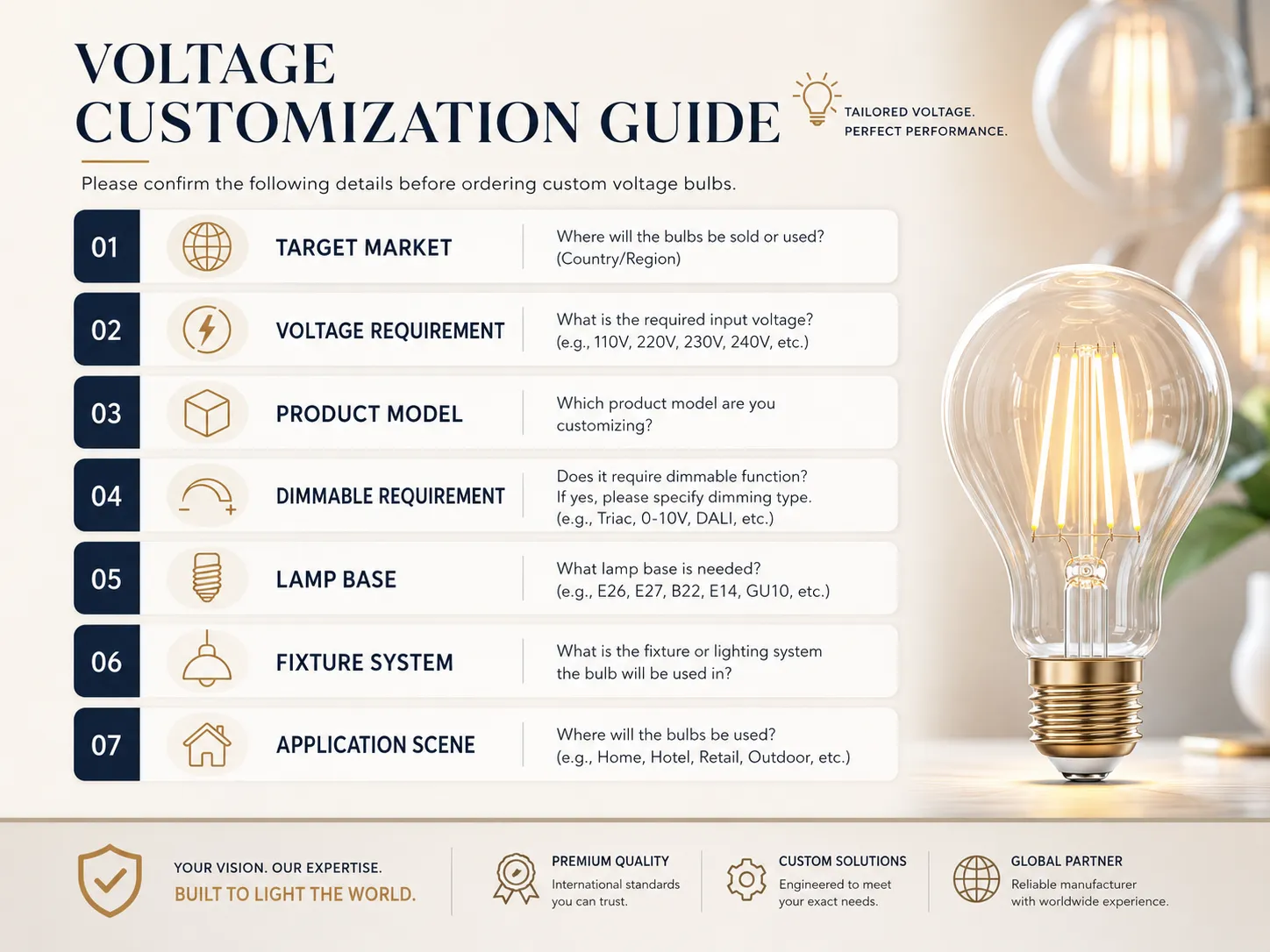
A clear first brief reduces repeated questions, unsuitable samples and avoidable changes after tooling or packaging work begins.
List every market. Do not write only “Europe” or “global.”
State 120V, 230V or the required range rather than “low” or “high” voltage.
Confirm 50Hz, 60Hz or whether both are required for the proposed version.
Specify E26, E27 or another base together with the fixture holder.
State fixed output or dimmable and provide the intended dimmer or control model.
Open or enclosed fixture, available space, orientation and operating environment.
Share required standards, labels, reports and who is responsible for market access.
Expected quantity, sample schedule, packaging, private label and launch markets.
A broad input range can simplify selected product programs, but it should never be presented as automatic worldwide compatibility.
A 120V or 230V bulb is not automatically compatible with every dimmer. Low-load circuits, dimmer topology, fixture quantity and the exact bulb electronics can affect flicker, start-up, noise and the usable low-end range.
Read the Dimmable Bulb Guide →These are real product references, not generic concept images. Final voltage, dimming, glass, filament and base specifications remain subject to project confirmation.

Custom short wording, dedicated market voltage options and dimmable or non-dimmable development routes.
View product →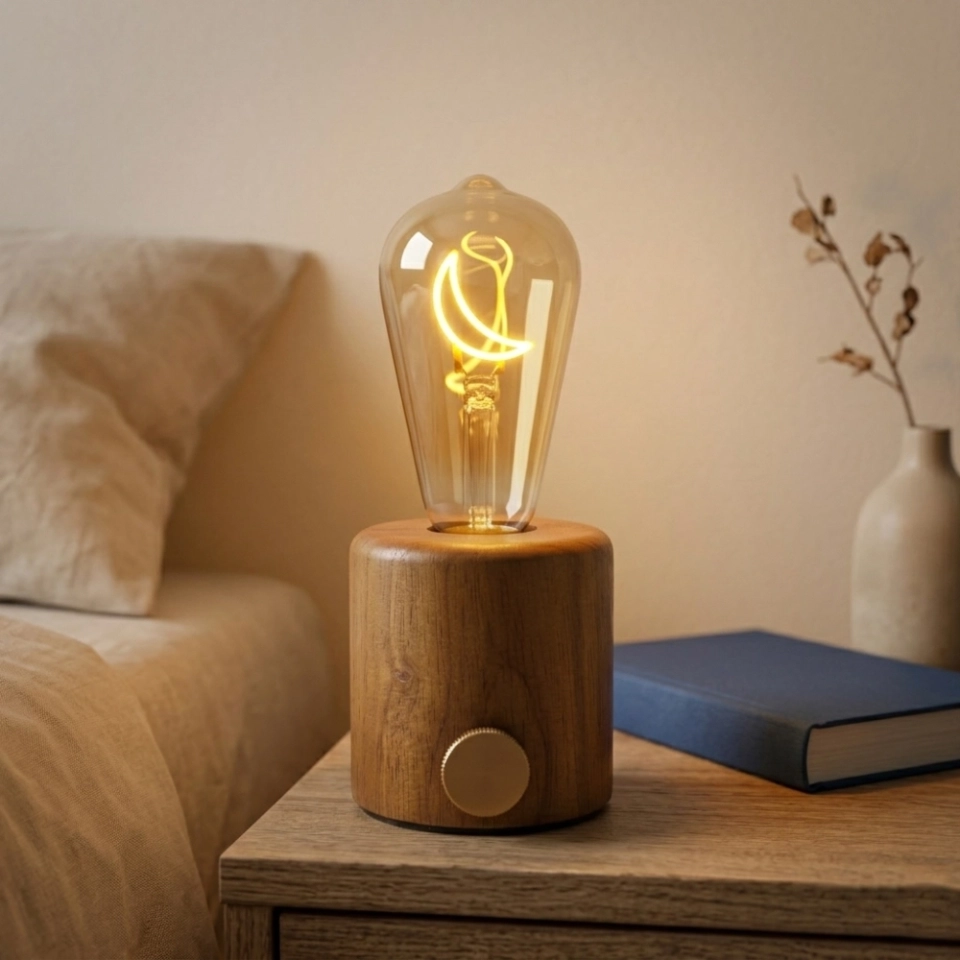
A compact decorative reference with market-specific voltage, dimming and glass-finish options.
View product →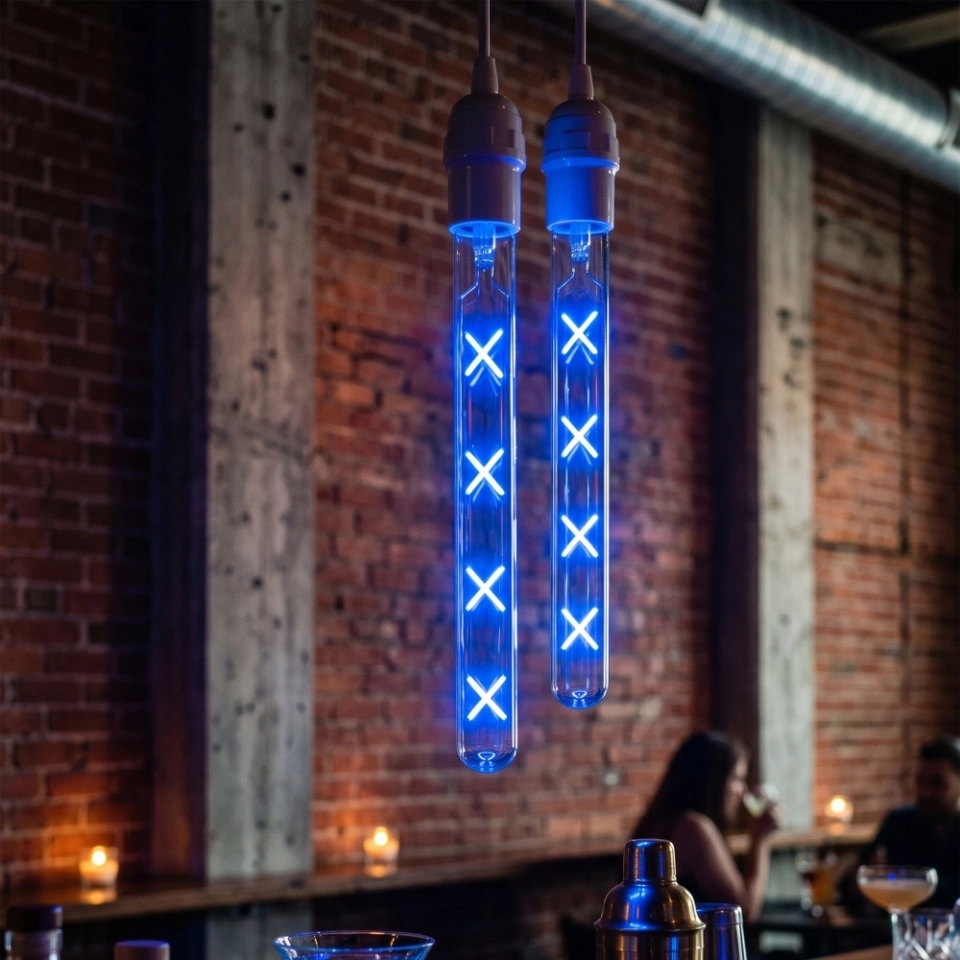
A long tube reference with a broad input option, custom glass and dimmable or fixed-output versions.
View product →
A colored-filament reference where input range, perceived color, dimming and control must be reviewed together.
View product →The safest B2B workflow is to approve the electrical version together with the physical product—not as a separate afterthought.
Country, voltage, frequency, base, fixture, dimmer and compliance scope.
Confirm whether a dedicated or selected wide-input version is suitable.
Build the agreed electrical version with the proposed glass and filament design.
Test in the actual fixture, supply and control environment whenever possible.
Freeze the rated input, base, dimming, appearance, labels and packaging.
Use the approved specification and sample as the repeat-order reference.
These are common reasons a visually approved bulb still fails to fit the buyer’s market or fixture program.
“230V” automatically means the product is ready for every European country.
E26 and E27 can be treated as the same base without checking the holder and market requirement.
A wide-input bulb will work with any dimmer and behave identically at every voltage.
Approval of glass color and filament appearance also approves the electrical construction.
One sample tested on a bench is enough for an enclosed fixture or multi-lamp dimming circuit.
Voltage, warning text and model information can be finalized after packaging production.
Concise answers for wholesale, private-label and commercial-project planning.
For selected models, yes. The two versions may require different internal electrical designs and must be treated as separate approved specifications or SKUs.
No. It describes a proposed input range for selected products. Frequency, base, dimmer, fixture conditions, approvals, labels and local market responsibilities still need confirmation.
Not unless the product is specifically rated for that input. Using a product outside its marked rating can damage it and create a safety risk.
Yes. Provide the destination frequency in the project brief. If both are required, this must be evaluated for the exact electrical version.
They are visually similar, but buyers should not assume interchangeability. Specify the required base, holder, fixture and target-market requirement in writing.
Selected models can be developed as dimmable or non-dimmable. The intended dimmer, connected load and required low-end performance should be tested with the sample.
Requirements depend on the destination, product category and agreed project scope. Tell us the required market and documents before quotation so feasibility and responsibilities can be reviewed accurately.
At minimum: model, input rating, frequency, base, dimming, glass, filament, brightness or visual target, markings, packaging and the approved sample or specification record.
Send the destination country, voltage and frequency, lamp base, fixture, dimming method, product reference, quantity and required compliance scope. We will review the next practical step with you.
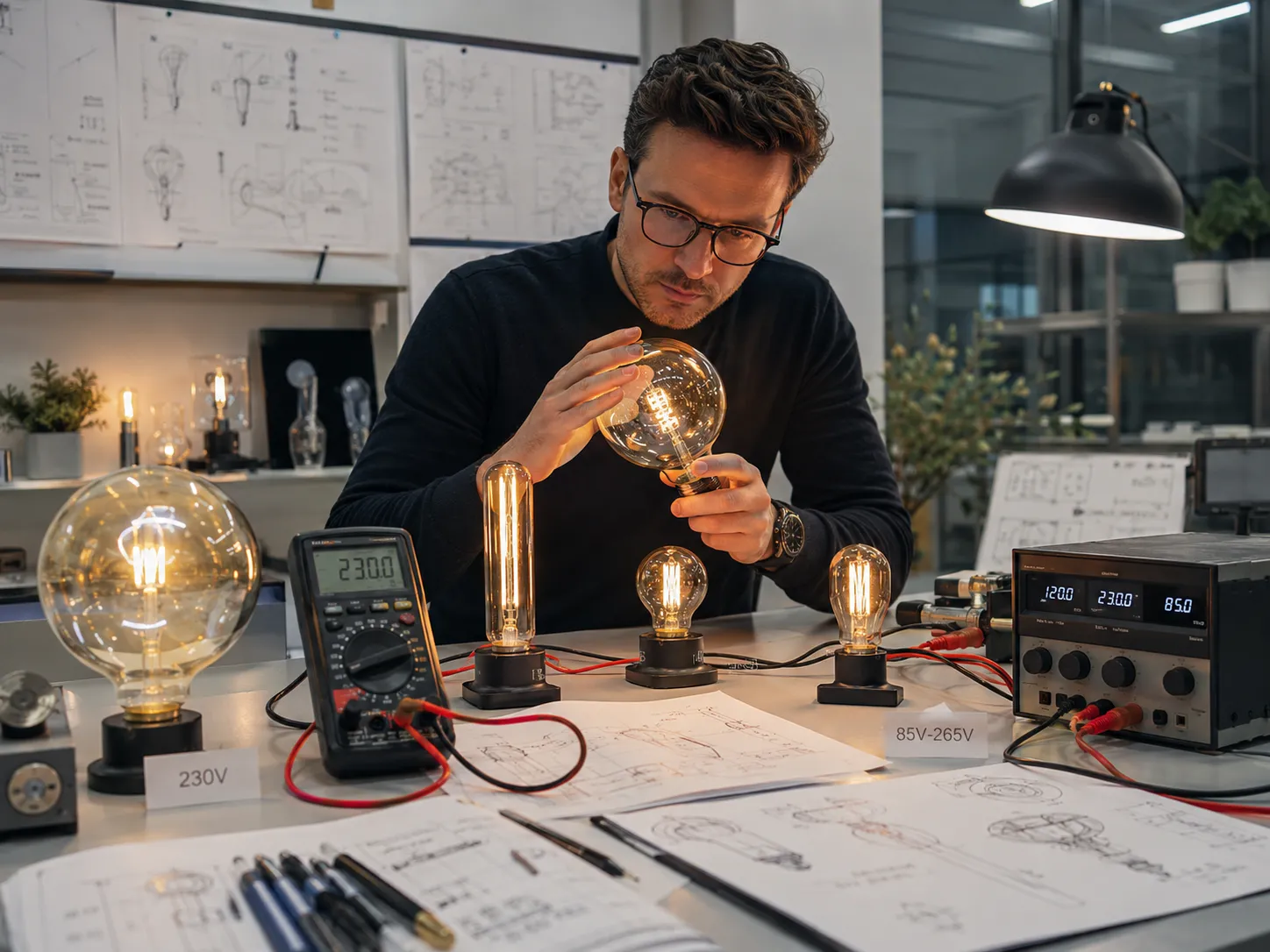
Voltage customization ensures that decorative glass bulbs can be developed for different markets, fixtures and project requirements. A bulb designed for one country may not be suitable for another market if the voltage does not match.
For custom atmosphere bulbs, voltage planning should be confirmed before production. This helps improve product compatibility, project efficiency and customer confidence.
Whether the product is used in restaurants, cafes, hotels, bars, retail stores or branded interiors, the correct voltage option is essential for safe and stable lighting performance.
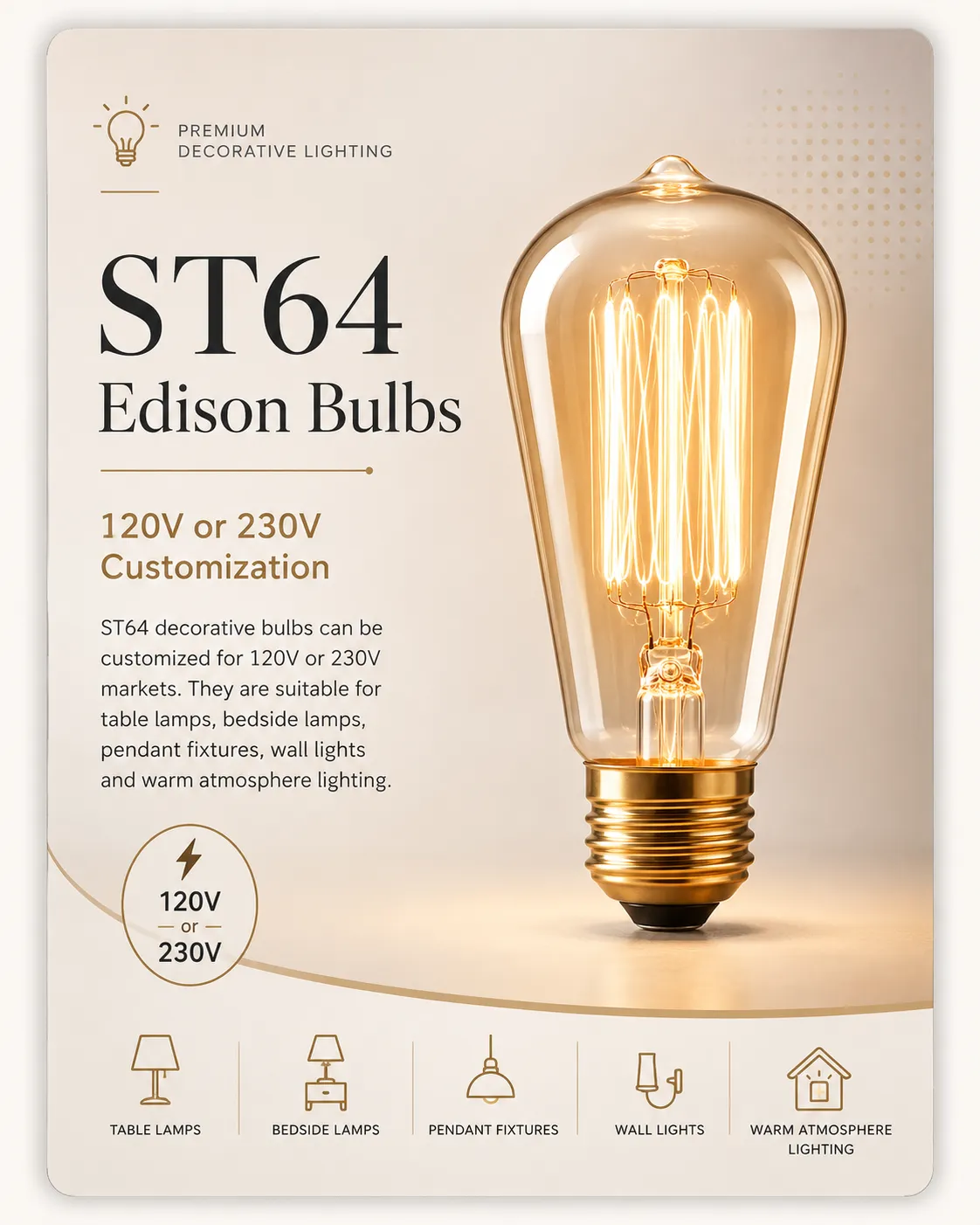
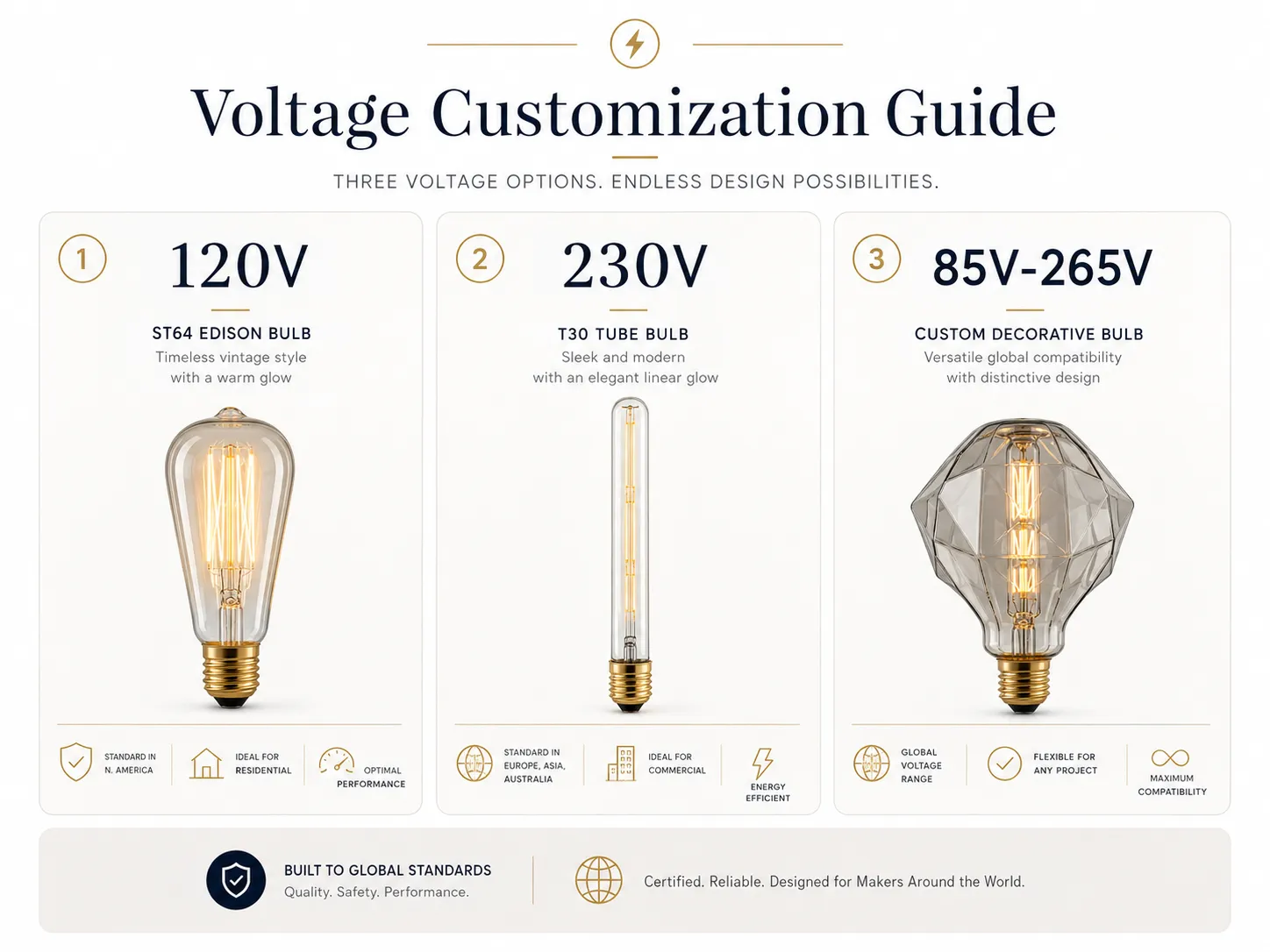
ST64 decorative bulbs can be customized for 120V or 230V markets. They are suitable for table lamps, bedside lamps, pendant fixtures, wall lights and warm atmosphere lighting.
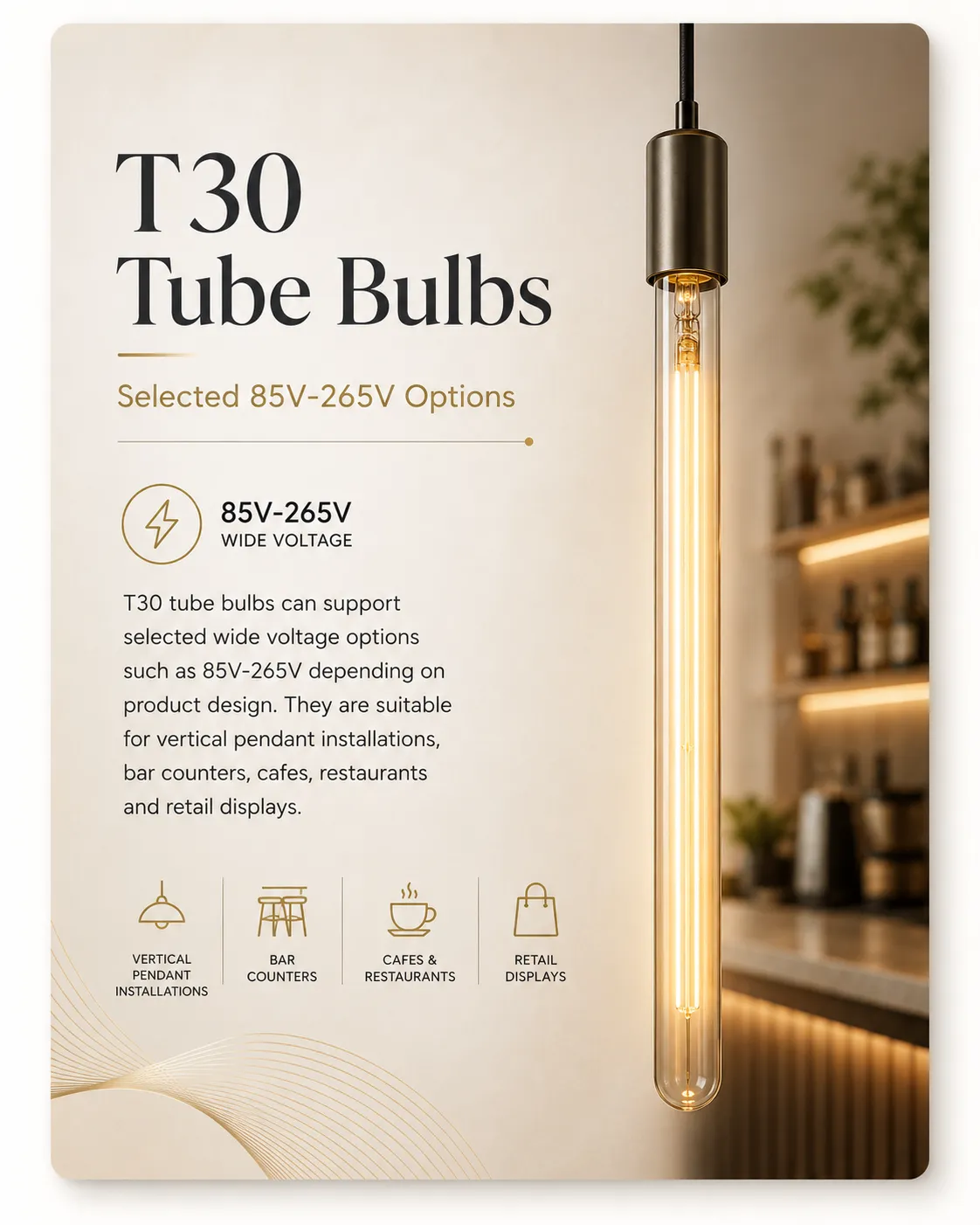
T30 tube bulbs can support selected wide voltage options such as 85V-265V depending on product design. They are suitable for vertical pendant installations, bar counters, cafes, restaurants and retail displays.
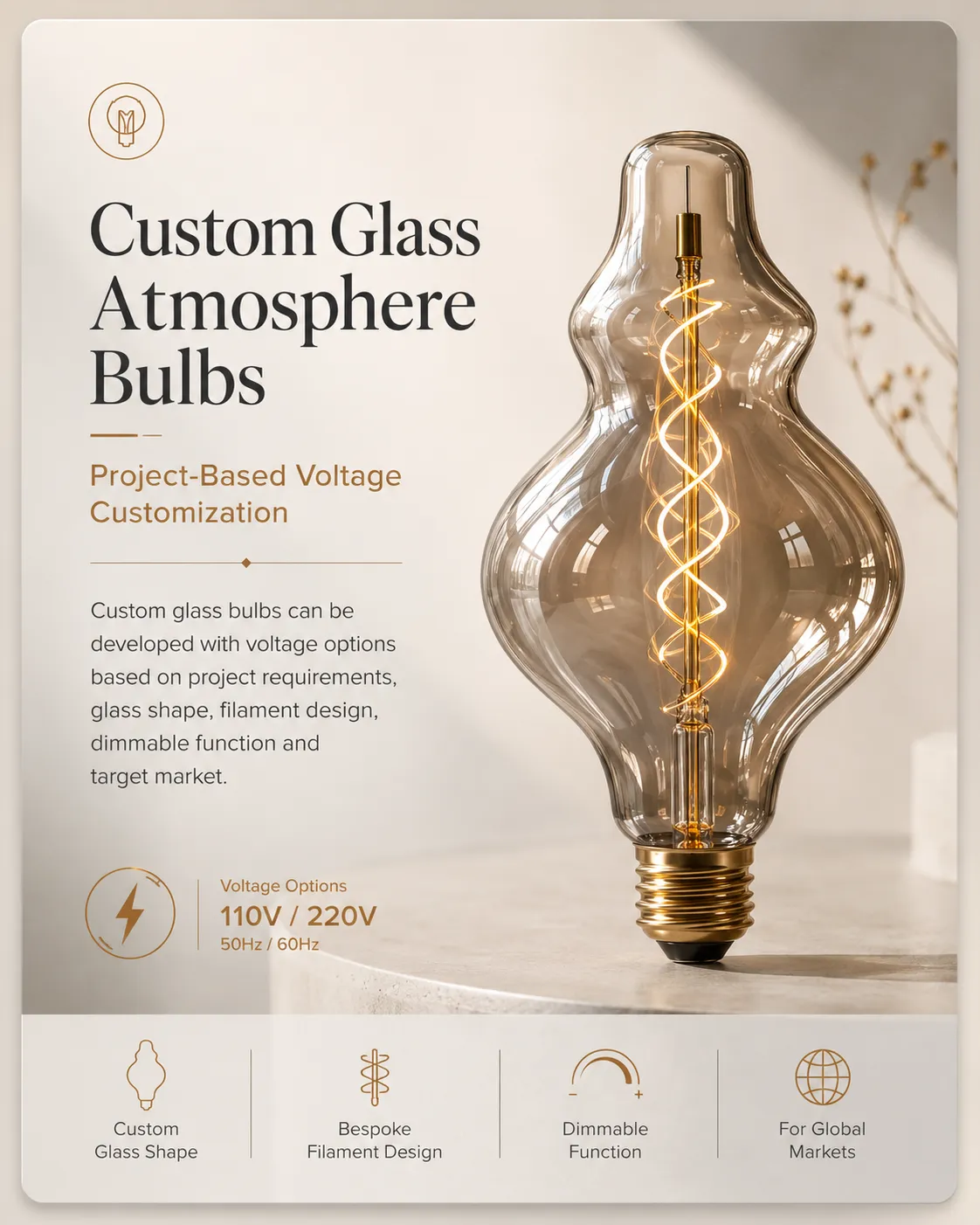
Custom glass bulbs can be developed with voltage options based on project requirements, glass shape, filament design, dimmable function and target market.
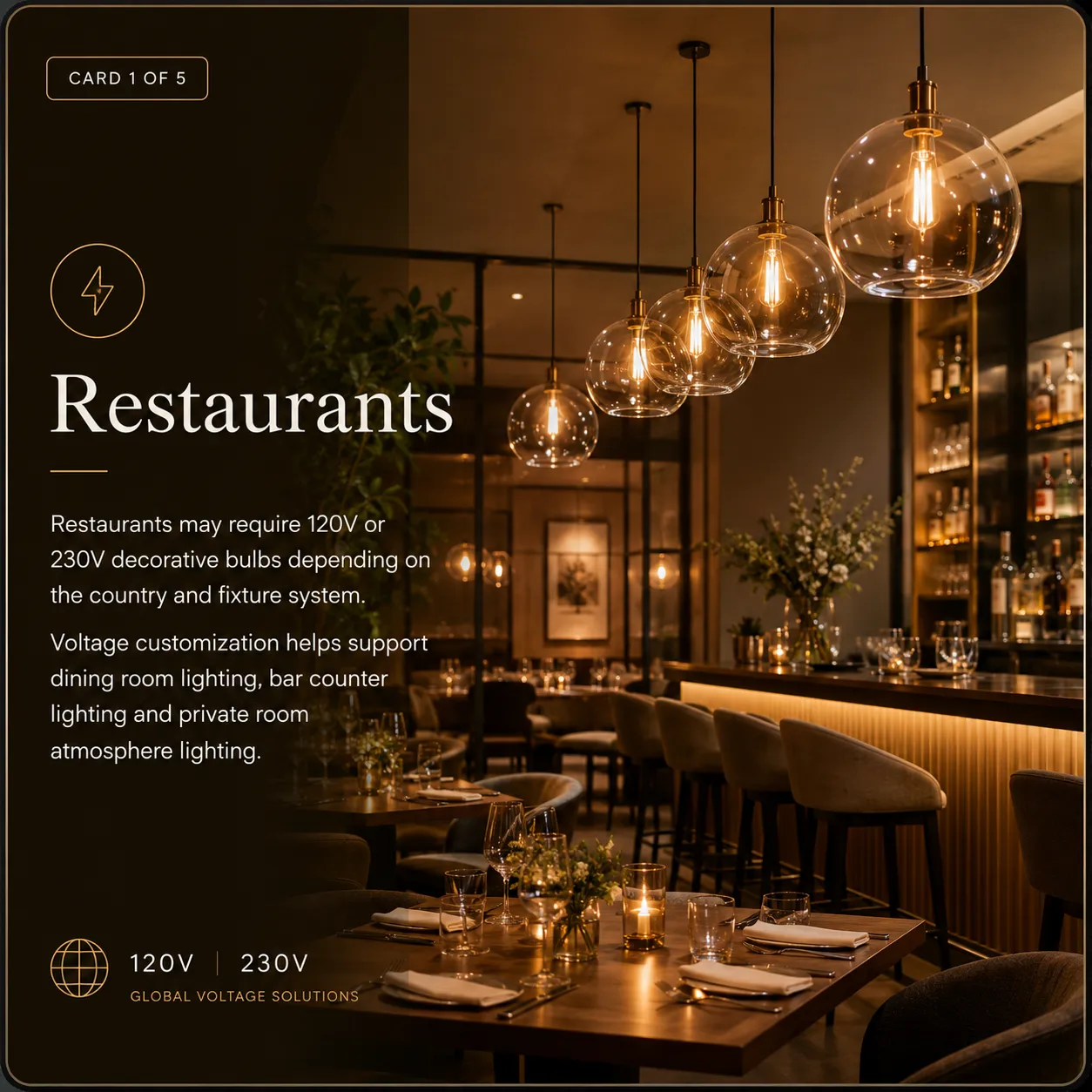
Restaurants may require 120V or 230V decorative bulbs depending on the country and fixture system. Voltage customization helps support dining room lighting, bar counter lighting and private room atmosphere lighting.
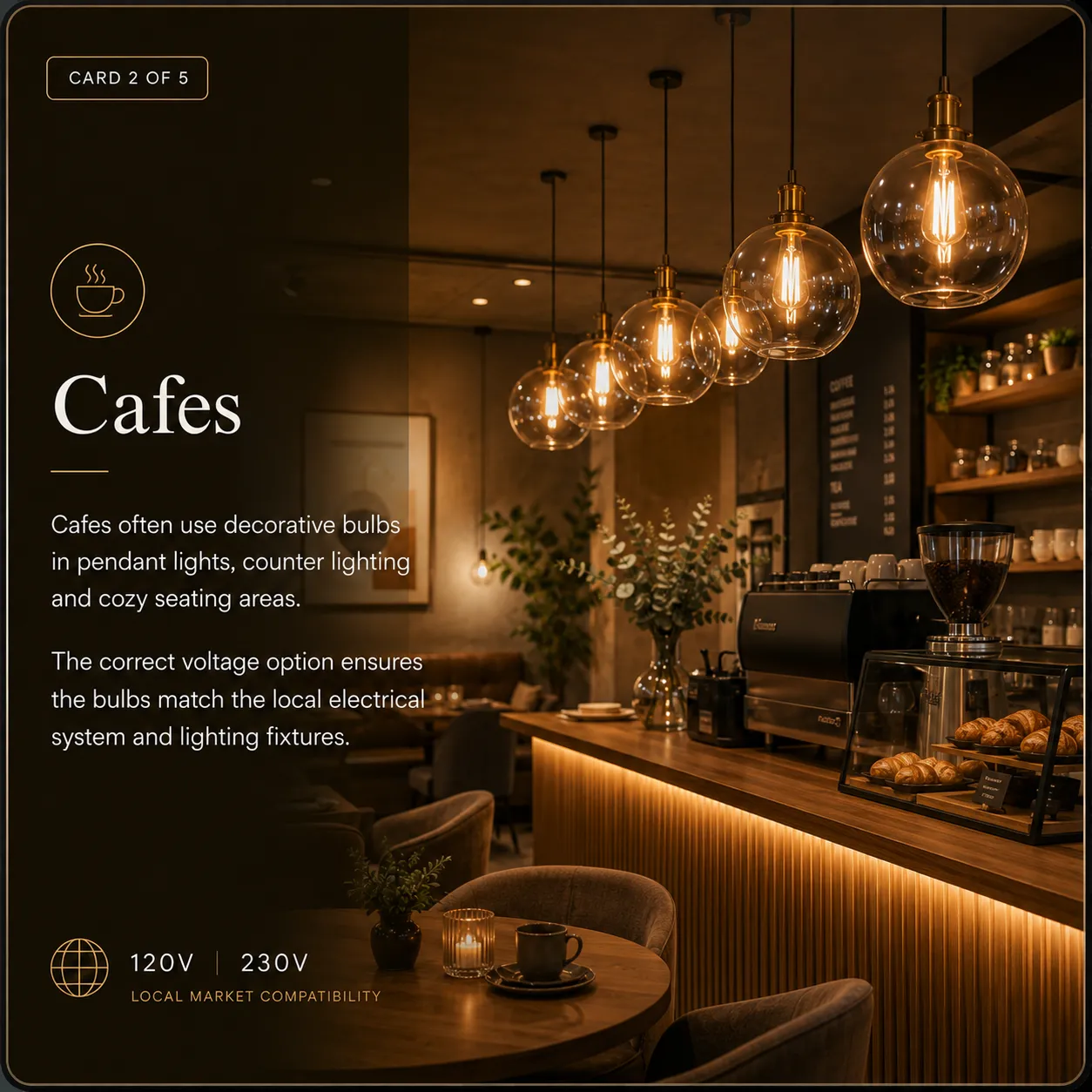
Cafes often use decorative bulbs in pendant lights, counter lighting and cozy seating areas. The correct voltage option ensures the bulbs match the local electrical system and lighting fixtures.
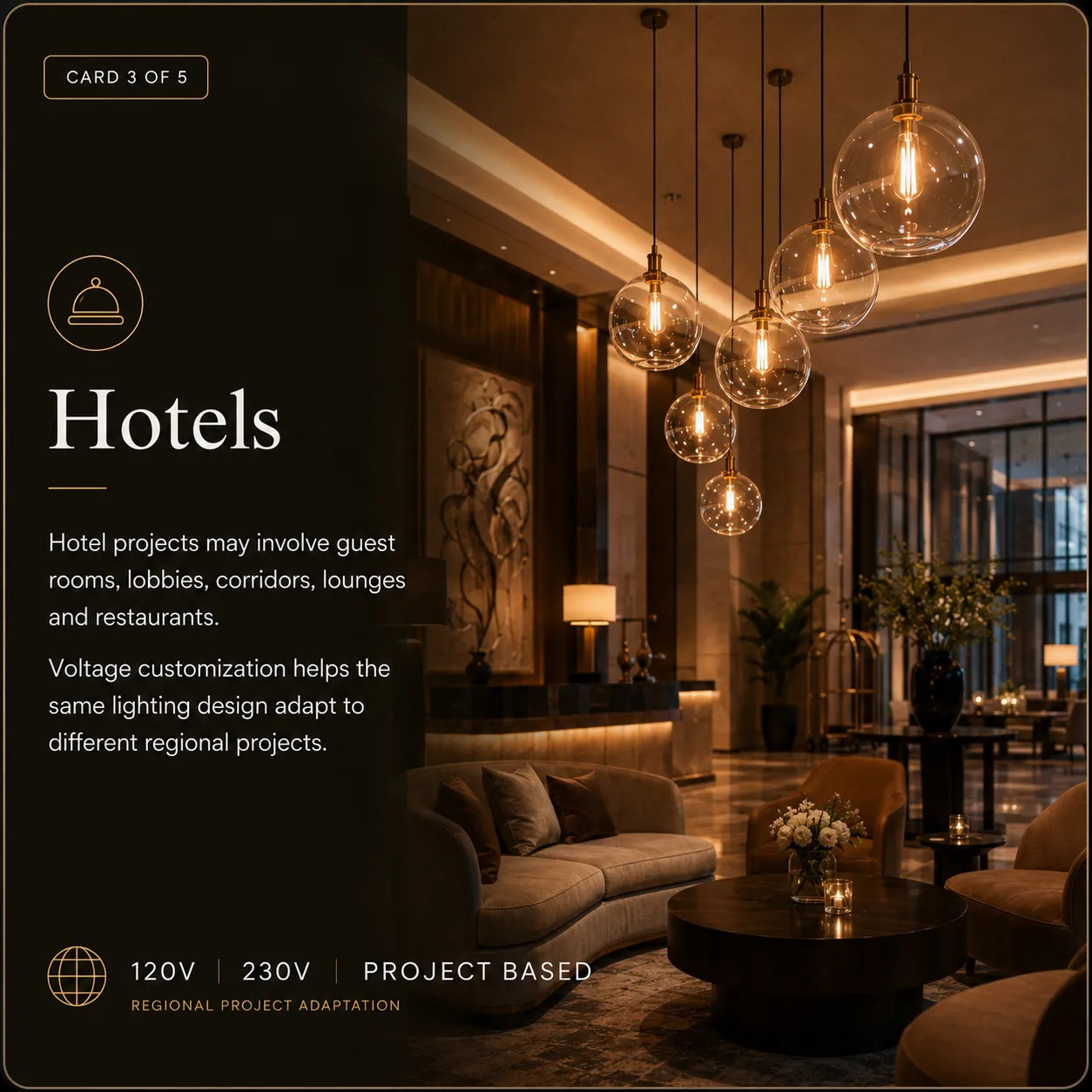
Hotel projects may involve guest rooms, lobbies, corridors, lounges and restaurants. Voltage customization helps the same lighting design adapt to different regional projects.
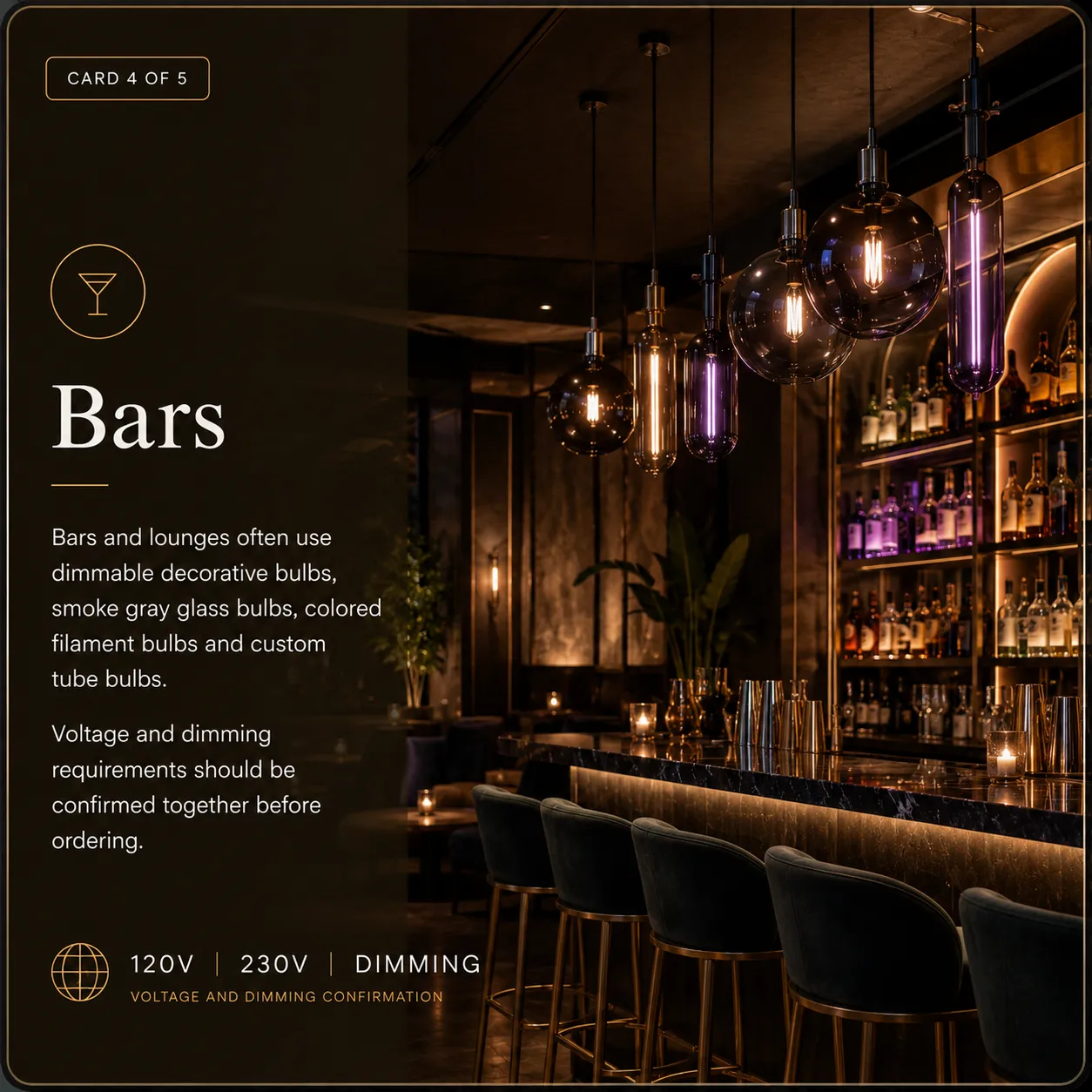
Bars and lounges often use dimmable decorative bulbs, smoke gray glass bulbs, colored filament bulbs and custom tube bulbs. Voltage and dimming requirements should be confirmed together before ordering.
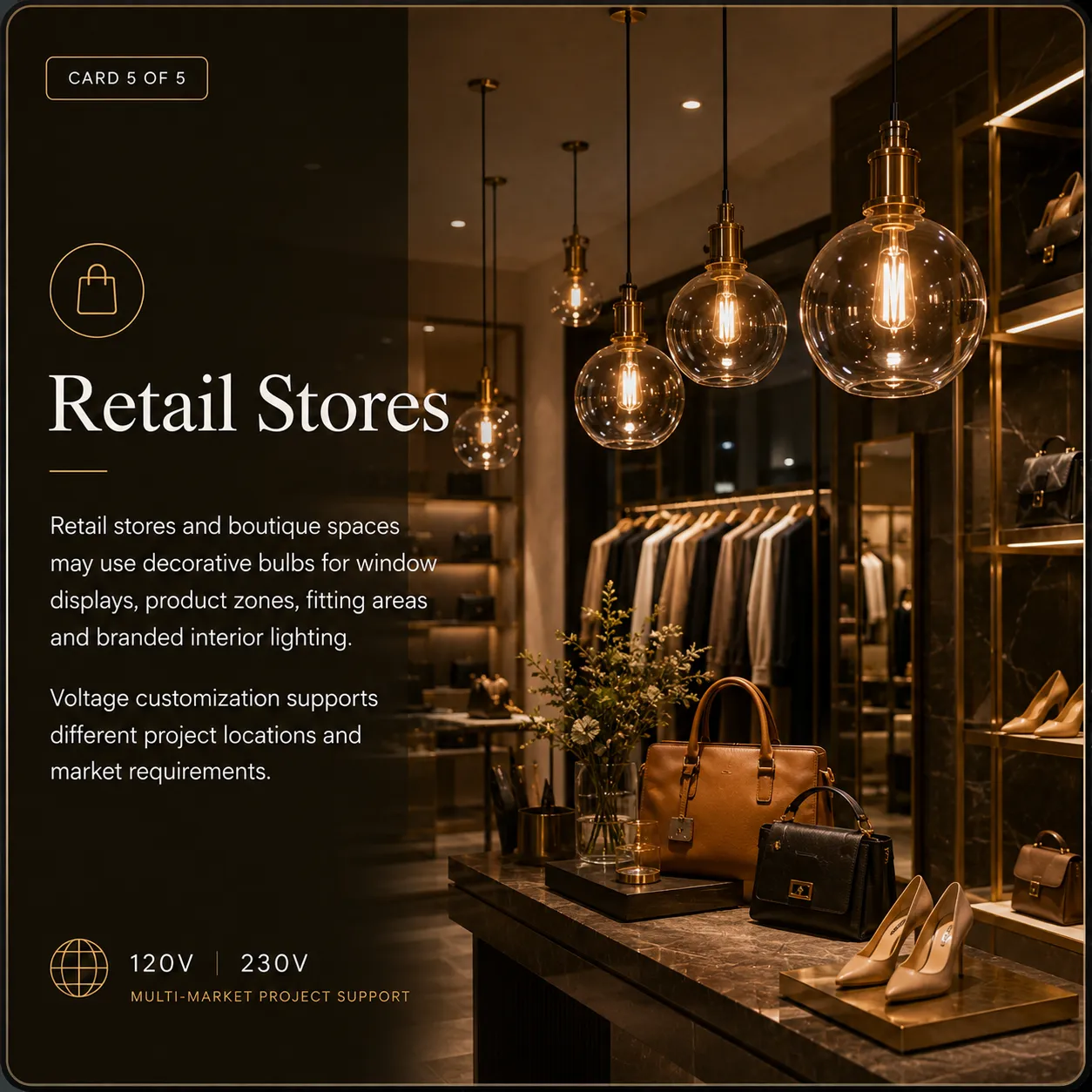
Retail stores and boutique spaces may use decorative bulbs for window displays, product zones, fitting areas and branded interior lighting. Voltage customization supports different project locations and market requirements.
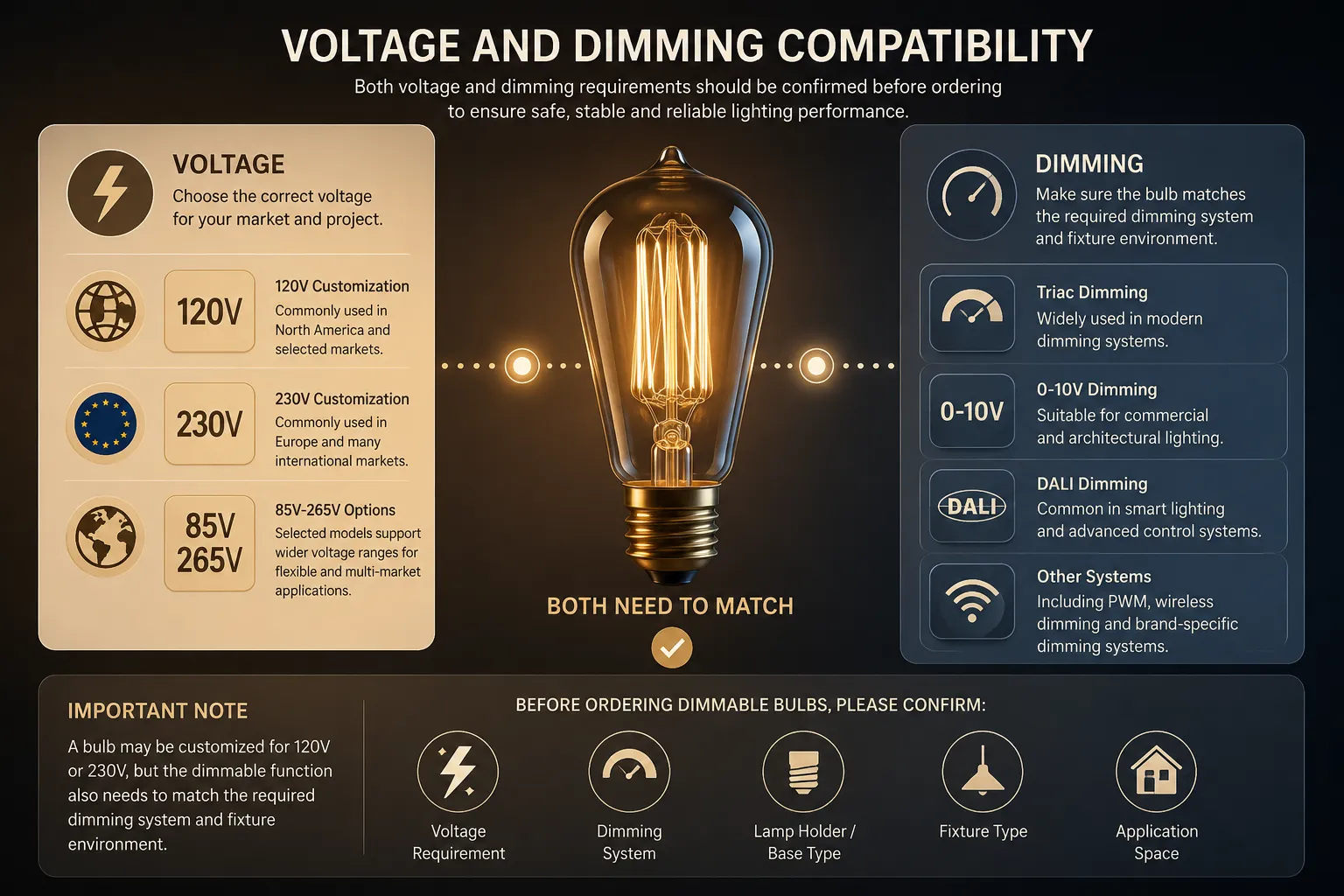
Voltage and dimming requirements should be confirmed together. A bulb may be customized for 120V or 230V, but the dimmable function also needs to match the required dimming system and fixture environment.
For restaurants, hotels, bars and lounges, dimmable decorative bulbs are often preferred because they allow brightness adjustment for different times of day and atmosphere needs.
Before ordering dimmable bulbs, customers should confirm the voltage, dimming system, lamp holder, fixture type and application space.
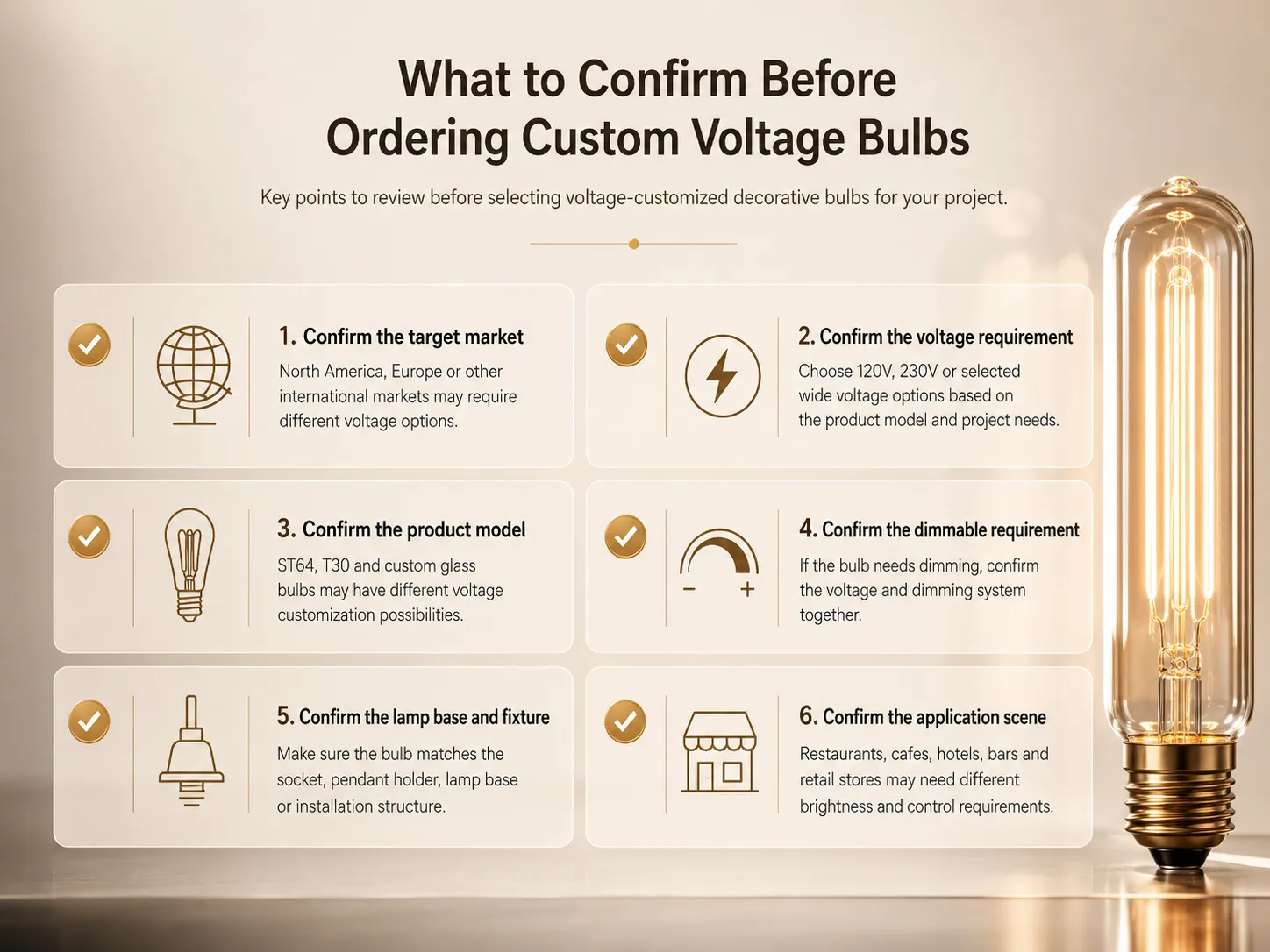
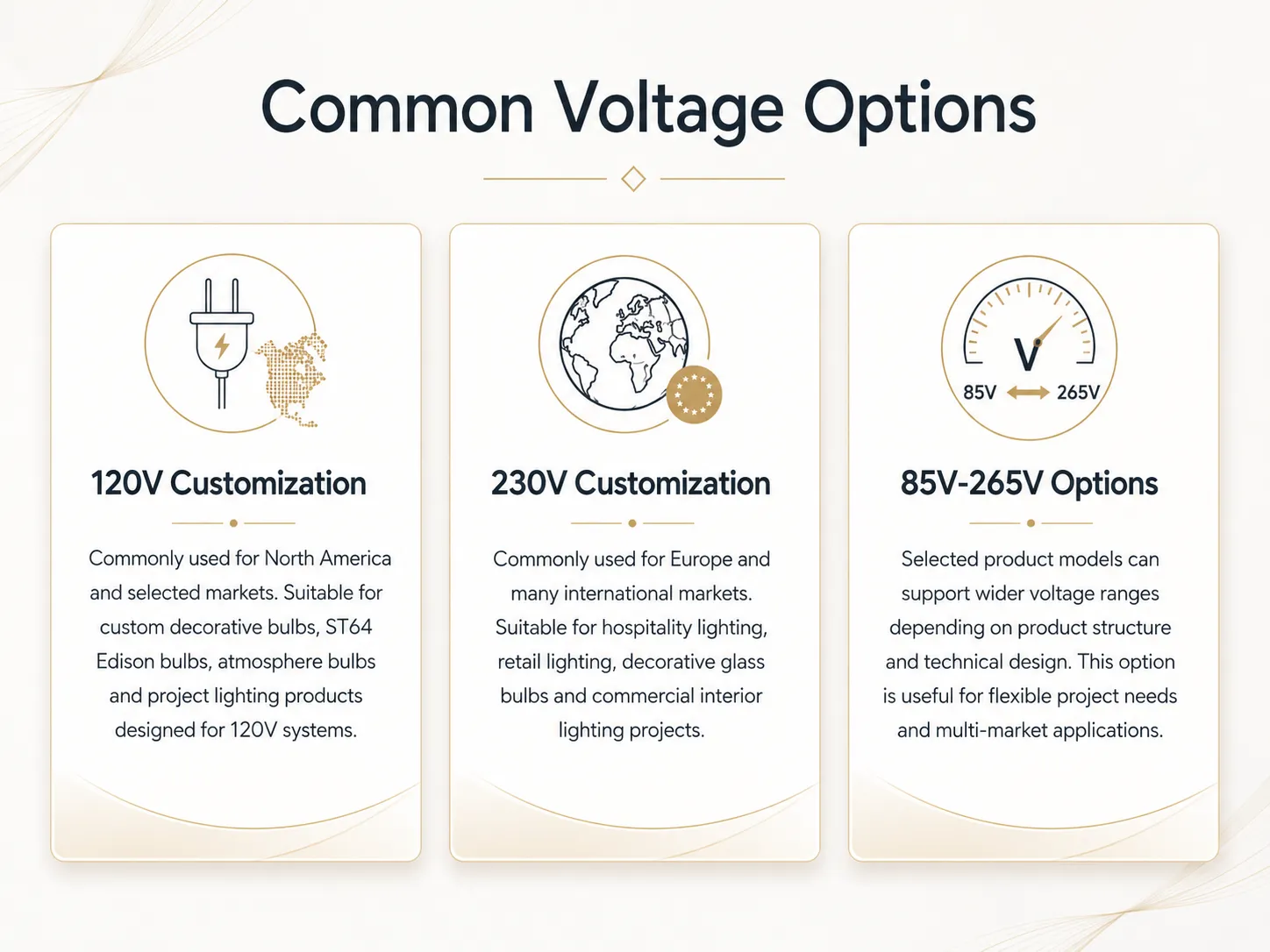
For lighting brands, distributors and commercial project suppliers, voltage customization is important for global business. The same decorative bulb design may need different voltage versions for different markets.
A product designed for North America may require 120V. A product designed for Europe may require 230V. Some selected models may support wider voltage ranges for more flexible applications.
Voltage customization helps lighting projects become easier to manage across different regions, especially for hospitality groups, restaurant chains, retail brands and international lighting collections.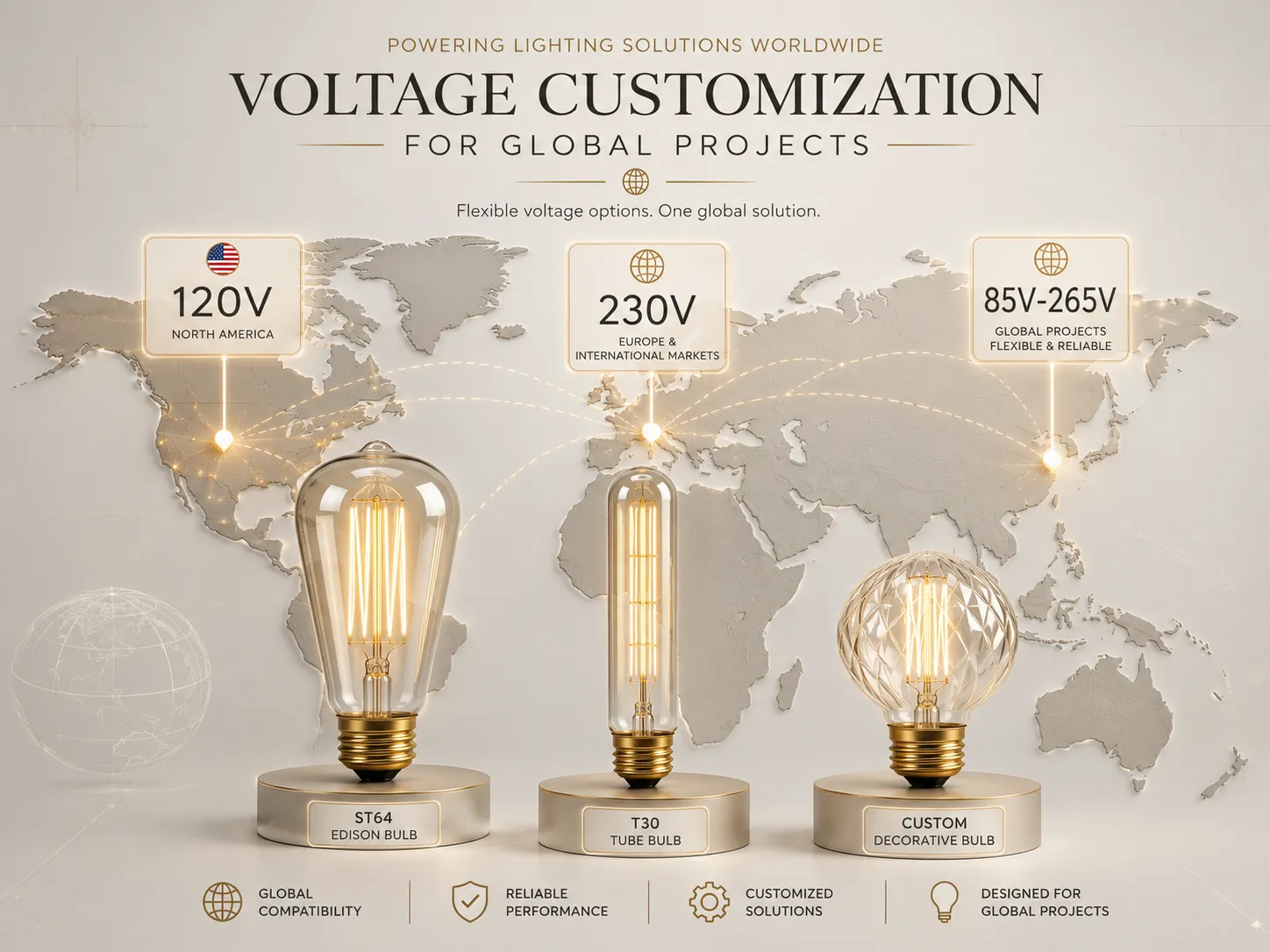
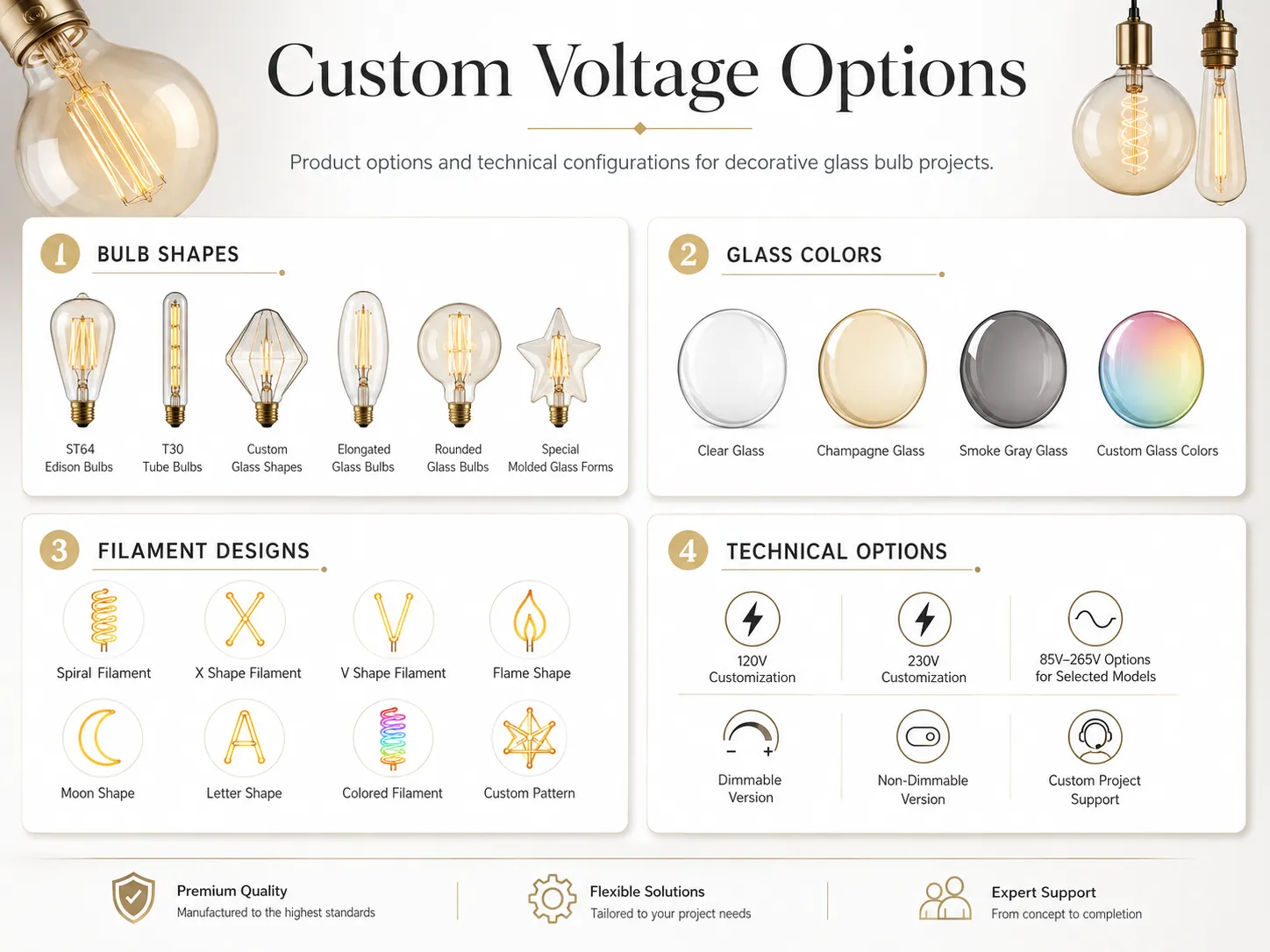
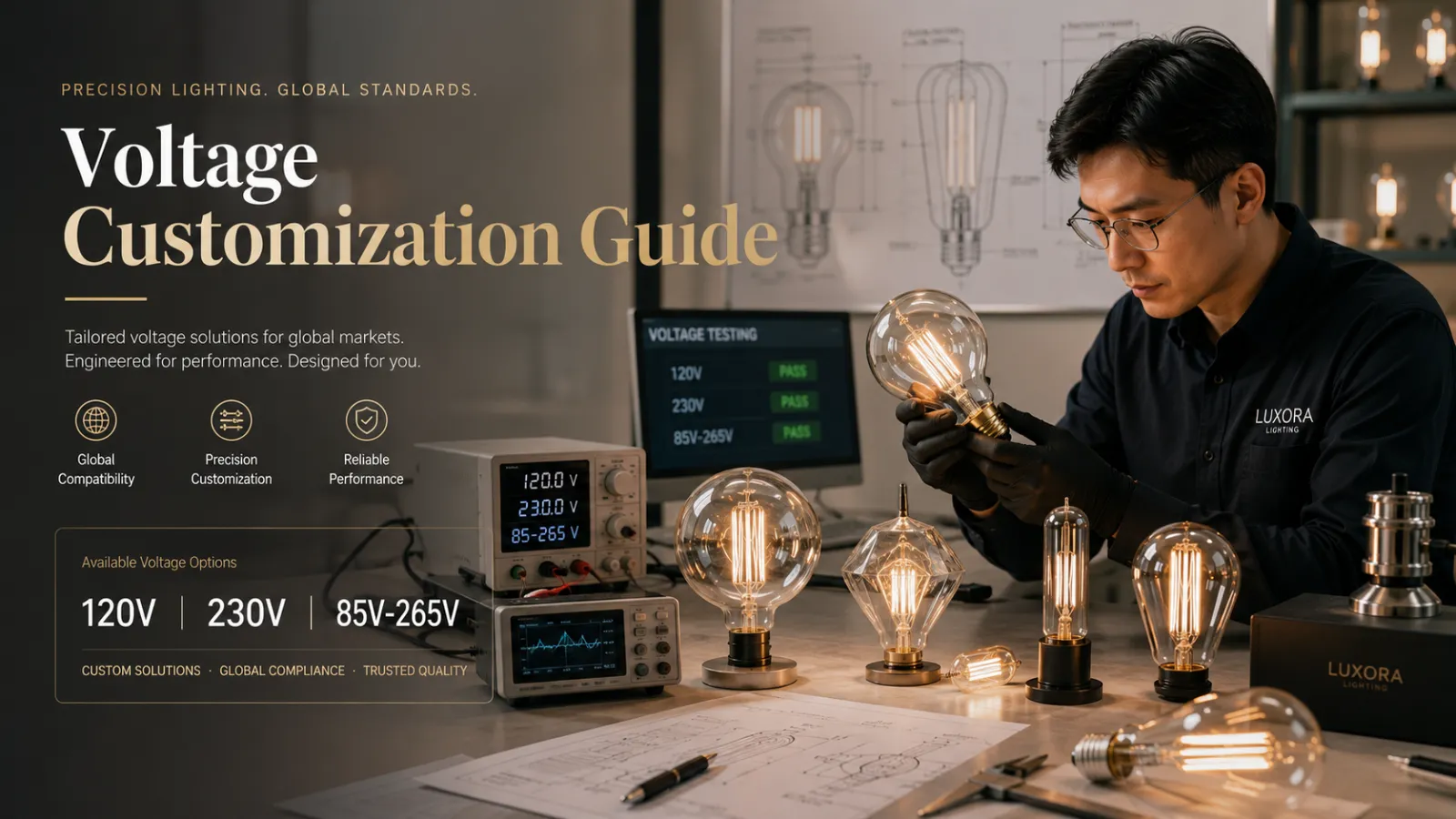
We can help you develop custom decorative glass bulbs with 120V, 230V or selected wide voltage options. Choose your bulb shape, glass color, filament design, dimmable version and technical requirements for your lighting brand or commercial project.
Contact us to discuss your custom voltage bulb project.