Usable internal space
The glass code and neck construction determine the height and width available for the filament—not the outside bulb dimensions alone.

Practical Guidance for Custom Decorative Bulb Projects
Product-based information for lighting brands, distributors, designers, contractors and commercial project buyers.
Choose a spiral, geometric pattern, short word, symbol or colored filament by what must remain clear inside the actual glass bulb—not by a reference image alone.
For lighting brands, wholesalers, designers, contractors and project buyers, the useful starting point is the complete requirement: glass shape, visible direction, readable distance, base, voltage, dimming, quantity and target market. GLORILUM reviews these details before a sample is confirmed.
A logo, handwritten word or icon may contain disconnected strokes, tight corners or fine detail that cannot be reproduced directly as an illuminated filament. The design has to work inside a physical glass envelope with supports, electrical connections and a defined viewing direction.
The practical question is not only “Can this image be copied?” It is “What simplified filament can be made, assembled, powered and repeated while keeping the intended visual idea?”
The glass code and neck construction determine the height and width available for the filament—not the outside bulb dimensions alone.
Disconnected details, tight bends and overlapping strokes may need simplification or a different support layout.
A flat word or symbol may read well from one direction but look narrow from the side. Define the important sightline before drawing.
Support wires, frame position and glass tint remain visible. Approve the complete unlit product, not only the illuminated pattern.
This comparison helps prepare the first inquiry. Final feasibility still depends on the selected bulb, target market, quantity and electrical specification.
| Filament direction | Best used when | Common limitation | Confirm before sampling |
|---|---|---|---|
| Spiral / linear | A strong vertical light line is the priority | Length and spacing are limited by the glass and supports | Glass code, filament height, pitch, color and output |
| X / V / repeated geometry | A regular decorative pattern should remain clear at a distance | Pattern count and symmetry change with usable height | Repeat count, center position and primary viewing angle |
| Letter / short word | A name, initial or short message is central to the product | Long wording and complex fonts lose readability | Exact wording, capitalization, line breaks and artwork |
| Symbol / icon | One recognizable outline communicates the idea | Fine internal detail and disconnected parts may be removed | Simplified outline, orientation and support position |
| Colored filament | Filament color is part of the visible specification | Color shifts with glass tint, brightness, camera and ambient light | Physical sample, glass finish and dimming requirement |
| Project-specific graphic | A branded or application-specific form is required | The source artwork may need substantial redraw | Must-keep elements, acceptable simplification, quantity and schedule |
Technical adjustment is not a failure to follow the concept. It is the step that turns a visual reference into a product that can be assembled, illuminated and reproduced.
Continue to the Bulb Shape Guide →The internal usable area may be smaller or shaped differently from the visible outside profile.
Very tight corners and sharp direction changes may not translate into a stable illuminated line.
Separate dots, short segments and floating details require supports or must be integrated into the main pattern.
Crossings and closely packed lines can become visually unclear when illuminated or viewed from a distance.
A word or icon that works on a screen may need fewer details and larger spacing inside the bulb.
The approved construction must be practical to position consistently across samples, production and repeat orders.
Use these real product photographs to identify a starting direction. Each link opens the related product so the glass form and filament can be considered together.
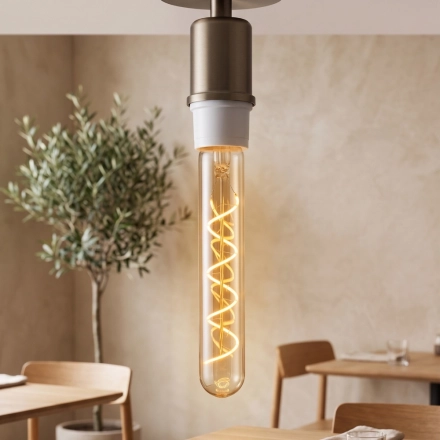
A continuous spiral reference for elongated glass where filament height and pitch define the visual result.
View product →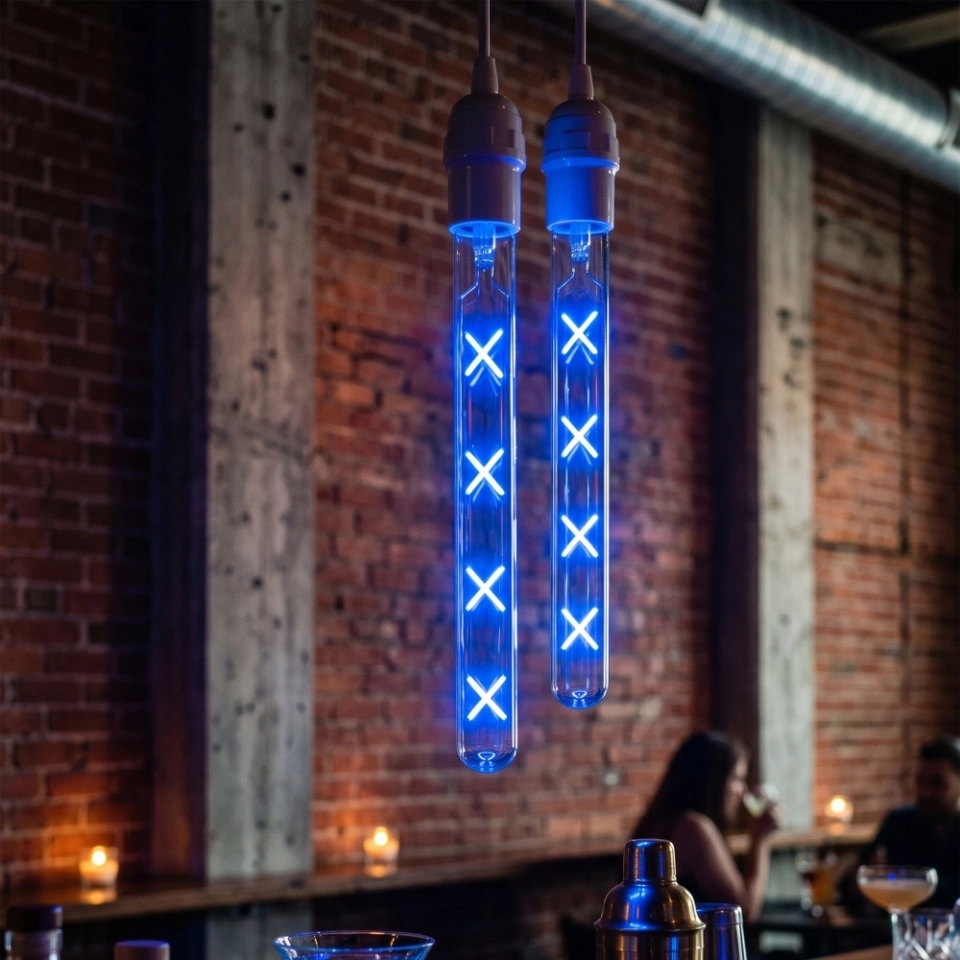
A repeated geometric structure using the length of a 300 mm tube envelope.
View product →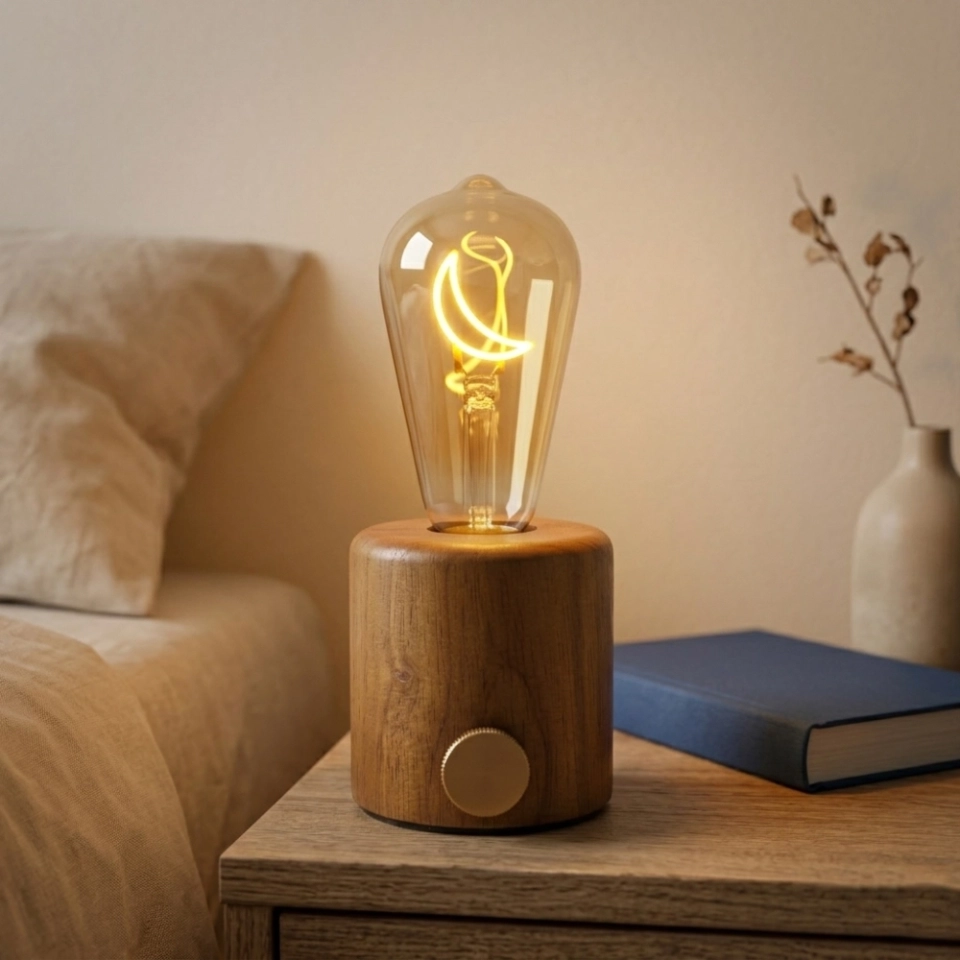
A compact symbol reference for checking outline, orientation and visibility inside classic ST64 glass.
View product →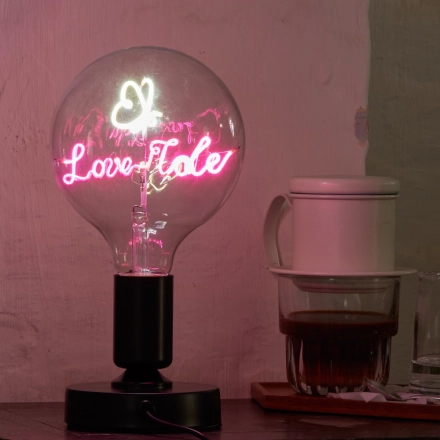
A broad clear globe reference for short wording, front-view readability and visible internal structure.
View product →
A project-specific pattern shown inside tinted glass, where both the graphic and glass finish affect readability.
View product →
A colored light-strip reference for reviewing color, glass interaction and the required control specification.
View product →Not every project needs a new filament from zero. Starting from an existing product or adapting an established construction can make the requirement clearer.
Choose an existing spiral, geometric, word, symbol or colored filament, then confirm the exact glass and electrical configuration.
Adjust pattern count, spacing, word, symbol, filament color or glass combination while retaining a practical existing base.
Share the source artwork, intended glass, primary viewing direction, target market, quantity and schedule for a dedicated review.
Review the complete bulb in the intended fixture or a representative mock-up. Keep the approved product code, artwork and electrical specification together.
Prepare a filament sample request →Short answers to the issues that should be settled before artwork, sampling and production.
Not always. Fine details, disconnected parts, sharp corners and overlaps may need to be simplified. Share the source artwork and identify the elements that must remain recognizable so a feasible direction can be reviewed.
There is no useful universal number. It depends on the word, letter style, capitalization, line breaks, bulb shape and readable distance. Short wording is usually clearer; the exact artwork should be reviewed in the selected glass.
A printed font is not built as a continuous illuminated structure. Letterforms may need larger spacing, fewer details and revised stroke connections so the filament can be supported and read inside the bulb.
It may need resizing or reconstruction. Different glass envelopes provide different internal height, width and neck geometry, and the same pattern can read differently behind clear, tinted or specialty glass.
Dimming is product- and control-specific. Confirm the filament color, driver construction, voltage, frequency, dimmer type and expected operating range together, then test the intended combination.
Send the artwork or reference, preferred bulb shape and glass finish, primary viewing direction, base, voltage, frequency, dimming requirement, quantity, target market, application and required schedule.
Send the artwork or visual reference together with the bulb shape, glass, electrical requirements, quantity and target market. We will identify the clearest existing, adapted or project-specific route.
Direct email: custom@glorilum.com