
Custom filament bulbs can turn a visible light source into part of a branded interior, but a logo or word cannot simply be copied into a bulb without adjustment. The available glass area, filament construction, viewing distance and electrical configuration all affect what can be made and how clearly the result can be read.
Start with the purpose, not the artwork alone
Name, initials or symbol
Suitable when the bulb is viewed at a deliberate distance and the requested mark can be simplified into a clear filament direction.
A short word or theme
Short text is usually easier to evaluate than a complex phrase. Letter spacing, orientation and the size of the bulb must be considered together.
Shape rather than text
Hearts, stars and project-specific symbols can create identity without requiring the viewer to read a complete logo.
Five decisions that determine whether the concept works
1. Simplify the artwork for filament construction
Fine strokes, small gaps, multiple colors and complicated logo geometry may not translate directly. Provide vector artwork where possible and identify the elements that must remain recognizable. A manufacturer review should happen before the customer commits to fixture quantities or marketing images.
2. Match the bulb shape to the design
A round globe gives a different design area from a narrow tube or ST64 outline. Wider glass may suit a short word, letter or compact symbol; a tall bulb may suit a vertical pattern. Fixture clearance, viewing angle and the orientation of the lamp holder also matter.
3. Choose glass that keeps the filament readable
Clear glass gives direct visibility. Champagne or smoke finishes add a strong visual character but can change contrast. If the project needs both custom glass and custom filament, approve them together rather than selecting each component separately from photographs.
4. Confirm the electrical configuration early
Base, voltage, dimmable requirement and target market are not afterthoughts. They determine the product direction that should be sampled. If the bulb will be dimmed in a venue, the sample should be checked with the intended control system.
5. Define how approval will be recorded
Use the approved drawing and sample as the project reference. Record the product code, glass, filament direction, electrical configuration and packaging details so that repeat orders can be compared against the same specification.
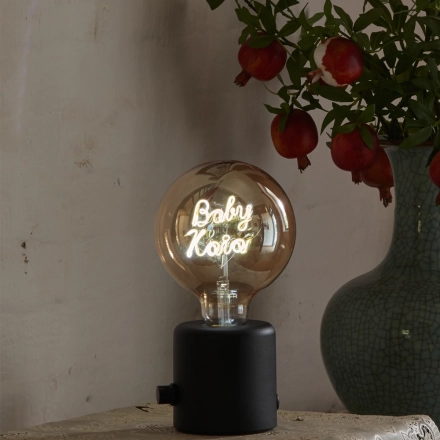
G125 Champagne Glass Custom Letter Globe Bulb
The larger globe format provides a useful reference for personalized names, short words and decorative letter concepts. The glass tint and filament design should be approved as one visual result.
View the G125 custom letter product →Where branded bulbs are most effective
- Retail and showroom features: entrance displays, consultation zones and branded product stories where the bulb can be seen at close range.
- Bars, restaurants and cafés: back bars, feature pendants and table-level decorative fixtures that support a short name or recognizable symbol.
- Hotels and events: signature spaces, lounge details and limited project concepts, provided the product configuration is suitable for the operating environment.
- Lighting brands and wholesalers: private-label or project ranges where artwork, product naming, packaging and repeat-order references are managed together.

Custom Heart Shaped Glass & Personalized Design
This product shows how glass form, letter work and pattern design can be combined for a B2B project. A distinctive glass envelope may communicate the concept more clearly than adding complexity to the filament alone.
View the custom heart product →Information to send for a feasibility review
- Vector logo, word, letters or pattern plus the essential visual elements.
- Preferred bulb shape, approximate dimensions and fixture clearance.
- Glass direction: clear, tinted or a supplied visual reference.
- Base, target voltage, market and dimmable requirement.
- Normal viewing direction and distance.
- Estimated quantity, sample requirement and target schedule.
- Packaging, labels and private-label information if required.
Use sampling to protect the project
The first goal is not to make the most complicated custom filament. It is to create a design that can be recognized, manufactured and repeated in the selected bulb. An artwork review reduces avoidable revisions; the physical sample then confirms the proportions, glass appearance, lit effect and fixture fit before production.
Send your artwork and project brief through the GLORILUM contact page for an initial feasibility discussion.